
China’s BrainCo pushes wearable BCI as non‑invasive alternative to Neuralink
BrainCo, founded in 2015, raises about $280M to push wearable brain‑computer interfaces and FDA‑approved bionic hands as a non‑invasive alternative to Neuralink.
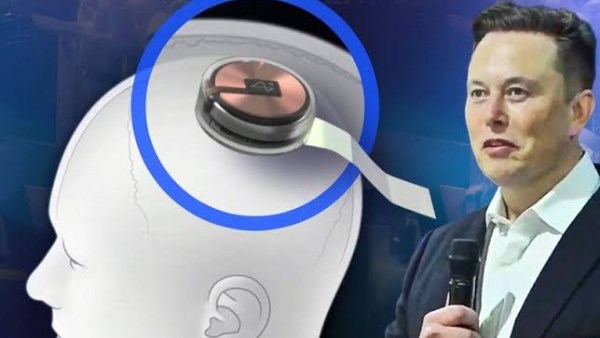
BrainCo, a China‑based neurotechnology company founded out of Harvard Innovation Labs in 2015, is betting the future of brain‑computer interfaces on wearables rather than skull‑implanted chips, the company told CNBC on July 11, 2026. The startup said it has raised 2 billion yuan (about $280 million) in a round led by IDG Capital and Walden International and highlighted FDA‑approved bionic hands as evidence of commercial progress. (news.google.com).
The contrast with Elon Musk’s Neuralink is stark: while Neuralink pursues intracranial implants, BrainCo plans to scale outward from proven medical devices into consumer wearables and software licensing. That strategy, the company argues, lowers regulatory friction and expands addressable markets more quickly than surgical implants — but it also faces a hard technical constraint because scalp‑level signals are “subtle and noisy,” CNBC notes. (news.google.com).
Why BrainCo points to bionic hands and FDA approval
BrainCo argues its FDA‑cleared prosthetics — which read neural and muscular electrical signals to drive finger motions — demonstrate real‑world efficacy and regulatory competence, giving the company a base to move into other clinical indications and consumer devices. The CNBC profile quotes Nyx He, BrainCo’s partner and senior vice president: “The implanted and non‑invasive approaches are different paths to different problems.” (news.google.com).
Regulatory traction matters. Implants face lengthy safety trials and surgical costs; a wearable that provides clinically meaningful benefits can reach patients sooner. BrainCo’s fundraise — 2 billion yuan — is intended to accelerate product development from prosthetics into treatments for ADHD and depression, and later into consumer electronics and licensing deals, the company says. (news.google.com).
Neuralink comparison: different problems, different tradeoffs
The public contrast with Neuralink — which has pursued high‑bandwidth intracranial implants and surgical robots — frames a market split rather than a head‑to‑head replacement. BrainCo accepts that some conditions, He says, “can only be addressed by going into the brain.” But it also maintains that many use cases, particularly where drugs underperform, may be better served by non‑invasive methods that are cheaper and easier to adopt. (news.google.com).
Skeptics point to the physics: scalp‑measured electroencephalography (EEG) and dry electrodes yield weaker signals than intracranial arrays, and decoding those signals reliably remains an open research problem. Independent researchers told CNBC that external sensors struggle to match the spatial and temporal fidelity of implanted devices; BrainCo’s answer is a combination of improved dry electrodes and AI decoders, an approach the company describes but has not yet published in peer‑reviewed trials. (news.google.com).
BrainCo’s next concrete milestones to watch are clinical results for its ADHD and depression programs and the company’s stated timeline for rolling consumer products and licensing partnerships. Investors will be watching whether the 2 billion yuan raise accelerates clinical evidence and whether non‑invasive hardware plus AI can close the performance gap with implants — a technical question that will determine which approach wins broader adoption.


