
Nvidia Announces OpenClaw Strategy at GTC 2026
Nvidia CEO Jensen Huang announces the OpenClaw strategy at GTC 2026, urging enterprises to adopt secure AI agents to stay competitive.
Nvidia Announces OpenClaw Strategy at GTC 2026
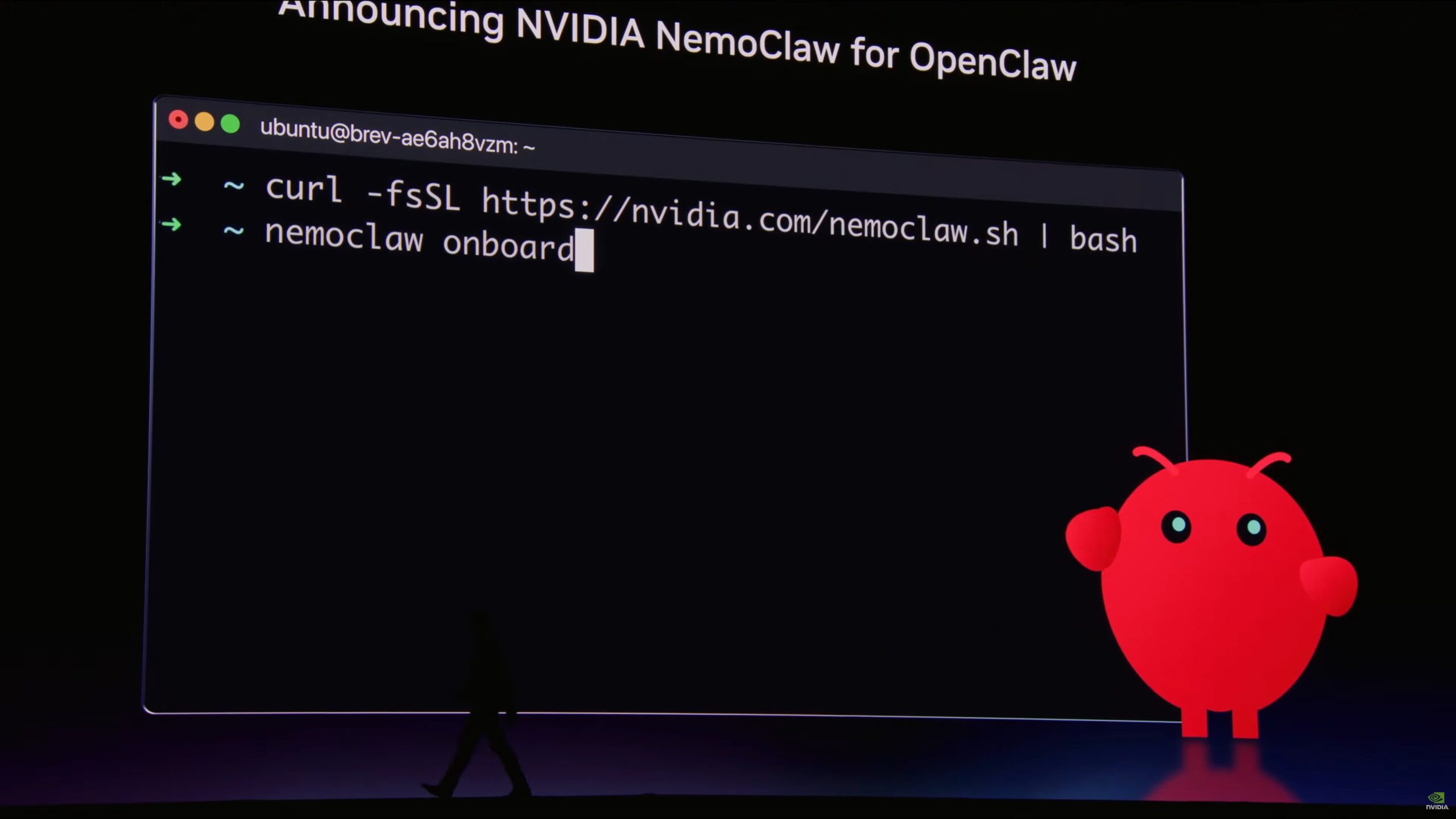
Nvidia CEO Jensen Huang unveiled the OpenClaw strategy during his keynote at the GTC 2026 conference in San Jose on March 20, 2026. This initiative encourages enterprises to adopt secure AI agents, positioning Nvidia as a central player in the AI landscape. Huang emphasized that developing an OpenClaw strategy is essential for companies to remain competitive in the AI era, likening it to foundational technologies like Linux or Kubernetes (Business Insider).
What is OpenClaw and Nvidia's NemoClaw?
OpenClaw is an open-source AI agent framework initially known as Clawdbot and Moltbot. It allows developers to build autonomous AI agents on company hardware, gaining popularity in Silicon Valley. Despite its creator Peter Steinberger joining OpenAI, the project remains open-source, fostering broad industry adoption (Business Insider).
To address security concerns, Nvidia launched NemoClaw, an enterprise-grade extension that adds privacy controls and network guardrails. This extension integrates with Nvidia's NeMo AI suite, facilitating hardware-agnostic deployment (TechCrunch).
Nvidia's Track Record: From GPUs to AI Dominance
Nvidia's shift to AI has been remarkable, with fiscal 2025 revenue reaching $96 billion, a 114% increase year-over-year. This growth was driven by the Hopper and Blackwell GPU platforms, which powered advancements in large language models (CryptoRank).
Competitor Comparison: Nvidia vs. the Field
| Company | Key Offering | Strengths | Weaknesses vs. Nvidia |
|---|---|---|---|
| Nvidia (NemoClaw) | OpenClaw-based secure agents | Hardware-software stack, $1T projection | Early alpha stage, vendor lock-in risks |
| OpenAI | GPT agents | Advanced reasoning models | Closed-source, less enterprise security focus |
| Anthropic | Claude-based agents | Safety emphasis | Limited hardware ecosystem |
| AMD | MI300X GPUs | Lower cost alternative | Weaker software stack |
| Gemini agents on TPUs | Cloud-native integration | Less open-source agent focus |
Why Now? Strategic Timing Amid AI Agent Boom
The rise of agentic AI coincides with enterprises demanding secure, local agents following data breaches in cloud LLMs. Nvidia's timing aligns with regulatory pressures like the EU AI Act, which mandates privacy controls (TechCrunch).
Skeptical Voices and Critiques
While analysts praise Nvidia's vision, they note risks such as dependency on Nvidia potentially stifling innovation. The alpha-stage of NemoClaw may delay enterprise adoption, and the $1 trillion sales forecast faces skepticism amid geopolitical tensions (TechCrunch).
Broader Implications for AI Ecosystem
OpenClaw strengthens Nvidia's full-stack dominance, facilitating easier agent prototyping but risking vendor reliance. Integrations in cloud and robotics are expected by 2027, with GTC demos showcasing rapid iteration and development (Kukarella).
This strategy could ignite an "industrial revolution in knowledge work," but its success depends on execution amid fierce competition (Nvidia).


