
OpenAI Introduces AI Data Agent for Enterprise Intelligence
OpenAI unveils an AI data agent using GPT-5 and Codex, transforming enterprise data analysis by enabling rapid insights across teams.
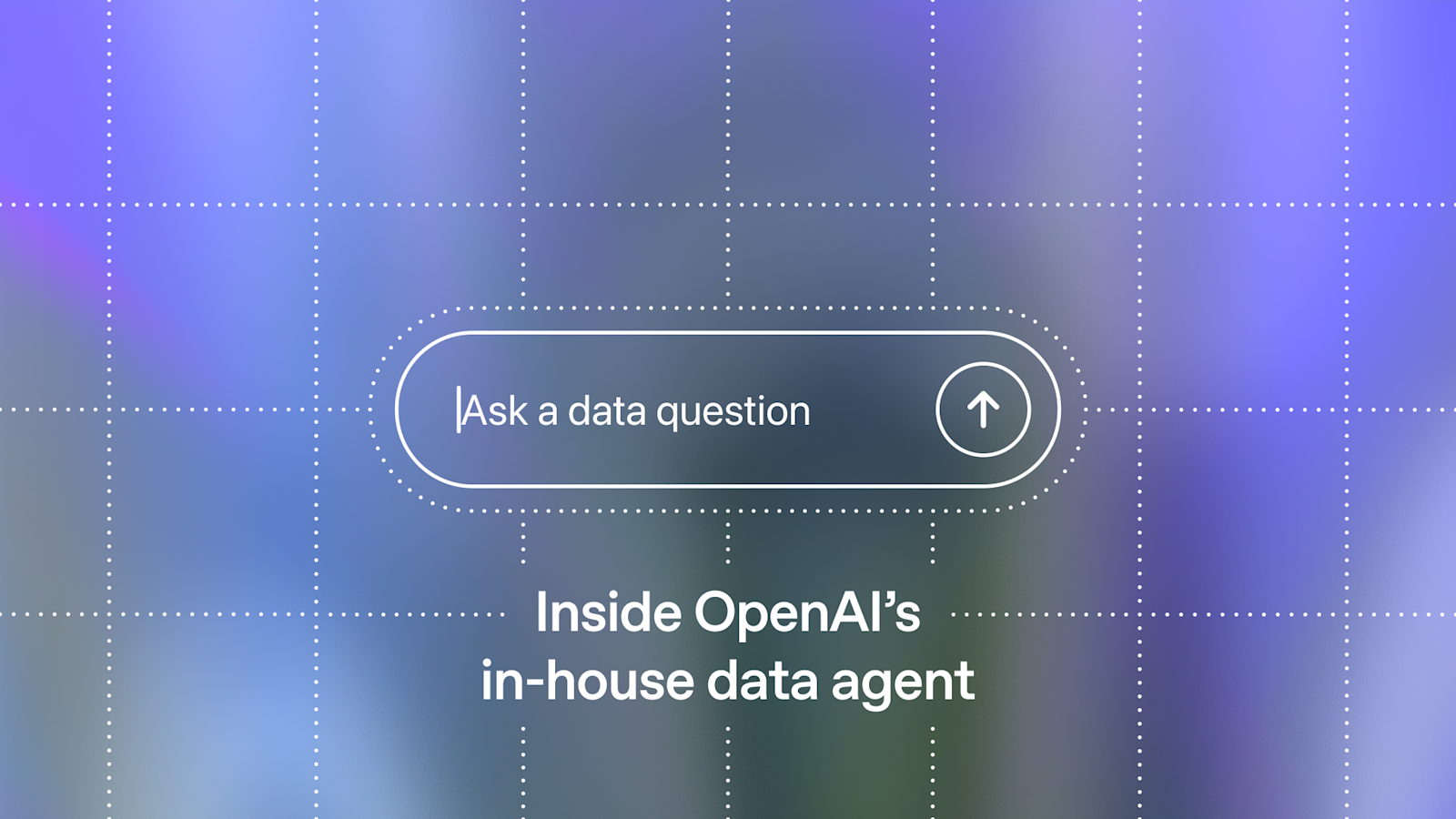
OpenAI's In-House Data Agent: Automating Enterprise Intelligence
OpenAI has introduced an in-house AI data agent utilizing GPT-5 and Codex to revolutionize how the company extracts insights from large datasets. This enables employees across engineering, finance, and research to transition from data queries to actionable insights in minutes, rather than days. The tool marks a significant shift in democratizing data analysis, empowering every function within an organization beyond specialized data teams.
The Architecture Behind OpenAI's Data Intelligence Layer
The data agent functions as a conversational teammate, combining Codex-powered table-level knowledge with organizational context. This allows it to understand both technical data structures and business implications. Unlike standard business intelligence platforms, it maintains continuous learning through a memory system that improves with each interaction, building institutional knowledge over time.
- Dynamic Querying: When metadata is unavailable or outdated, the system can issue live queries to OpenAI's data warehouse, inspecting schemas and understanding data in real-time.
- Integration: The agent communicates with other Data Platform systems, including metadata services, Airflow orchestration, and Spark processing engines, to gather broader context across the data infrastructure.
- Conversational Interface: Users can ask follow-up questions or redirect the agent mid-analysis, similar to collaborating with human data analysts.
Strategic Timing: Enterprise AI in 2026
The release aligns with OpenAI's 2026 priority of practical AI adoption, addressing the gap between AI capabilities and their deployment in daily operations. OpenAI leadership has identified enterprise, health, and science as sectors where "better intelligence translates directly into better outcomes."
- Infrastructure Investments: OpenAI's compute capacity expanded from 0.2 gigawatts in 2023 to 1.9 gigawatts in 2025, correlating with revenue growth from $2 billion in 2023 to over $20 billion in 2025.
Operational Impact at OpenAI
The data agent is embedded across multiple business functions at OpenAI, serving as both a validation and a testbed for refinement before broader distribution.
- High-Impact Questions: Teams in Engineering, Data Science, and Finance use the agent for launch evaluation and business health assessment.
- Accessibility: It interprets natural language intent, making data analysis accessible to non-technical stakeholders, reducing dependency on specialized data teams.
Competitive Context and Market Positioning
While not positioned as a direct competitor to traditional BI platforms like Tableau or Looker, the agent integrates autonomous AI reasoning with database querying.
- Partnerships: OpenAI has partnerships with major retailers and software companies, such as Target and Intuit, suggesting the data agent as foundational infrastructure for enterprise automation.
Technical Roadmap and Future Development
OpenAI plans ongoing improvements to the agent, enhancing its ability to handle ambiguous questions and integrating deeper into existing workflows.
- Future Integration: The agent aims to blend naturally into existing work processes, embedding data querying capabilities directly into applications.
Implications for Enterprise AI Adoption
OpenAI's data agent exemplifies a trend in 2026: AI moving from capability demonstration to workflow integration.
- Practical Use Case: The agent reduces analysis cycles from days to minutes, impacting business velocity in functions like finance and sales.
- Reliability: Its ability to validate its work and request clarification addresses concerns about AI reliability in business processes.
As OpenAI scales compute infrastructure and expands partnerships, tools like the data agent will likely become central to operationalizing AI beyond experimentation phases.


