
Optics Bottleneck in AI: Lumentum Gains Amid Shift
Optics technology emerges as a critical bottleneck in AI, with Lumentum Holdings positioned to benefit from the shift.
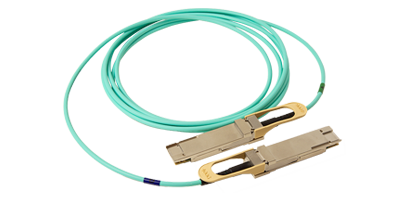
Optics Bottleneck in AI Infrastructure
As artificial intelligence models expand, optics technology has become a critical bottleneck, surpassing traditional compute and power constraints. This shift is poised to benefit companies like Lumentum Holdings Inc. (NASDAQ: LITE), a key supplier of high-speed optical components, as highlighted by MarketWatch.
The Optics Crunch
AI data centers, such as those powering OpenAI's GPT series and Meta's Llama models, require massive clusters of GPUs interconnected at terabit speeds. Copper-based electrical signaling faces physical limits beyond 1-2 meters, necessitating a shift to optical interconnects using fiber optics for low-latency, high-bandwidth communication (Reuters). Optical solutions offer up to 10x efficiency gains, as noted by Bloomberg.
NVIDIA CEO Jensen Huang emphasized the necessity of optical connections for scaling beyond million-GPU clusters, with deployments expected in 2026 (WSJ). Optics now accounts for 20-30% of AI cluster costs, up from negligible levels two years ago (TechCrunch).
Lumentum's Strategic Positioning
Lumentum, a spinout from Oclaro, specializes in indium phosphide (InP)-based lasers and transceivers crucial for 800G and 1.6T optical engines. The company's revenue surged 45% year-over-year in Q1 2026 to $438 million, driven by AI datacom demand (SEC Filing).
- Past Performance: Lumentum's stock rose 180% over the past 18 months, outperforming the PHLX Semiconductor Index by 50%. In FY2025, AI-related sales hit $1.2 billion, a 300% increase from 2023 (Bloomberg).
- Key Products: Its 800G DR8 transceivers, used in NVIDIA's Spectrum-X platforms, reduce power per bit by 40% compared to prior generations.
Competitor Comparison
Lumentum faces competition but holds a narrow lead in InP laser yields, essential for coherent optics.
| Company | Market Share (AI Optics, 2025) | Strengths | Weaknesses |
|---|---|---|---|
| Lumentum (LITE) | 22% | High-volume 1.6T production; NVIDIA partnerships | Higher costs vs. silicon photonics |
| Coherent (COHR) | 28% | Broader portfolio; telecom crossover | Slower AI ramp-up |
| Ayara Optics | 5% | Emerging CPO tech | Limited production scale |
| Broadcom (AVGO) | 15% | Custom ASICs with optics | Less focus on pure-play transceivers |
Coherent leads slightly but trails Lumentum in AI-specific growth (35% vs. 52% YoY) (WSJ).
Market Timing and Strategic Context
The optics bottleneck became evident in late 2025 amid the AI training arms race. Frontier models like GPT-5 required 10M+ GPU clusters, where electrical I/O became the limiter (Reuters). NVIDIA's 2026 Blackwell roadmap mandates optics for all high-end systems, aligned with U.S. CHIPS Act subsidies (Bloomberg).
Skeptical Voices and Risks
Not all views are bullish. Barron's warns of overhype, citing Lumentum's 2024 gross margins dipping to 35% from yield issues (Barron's). A16z notes supply chain fragility, with China dominating InP wafers at 70% (A16z).
Broader Implications for AI Ecosystem
This shift could unlock exascale AI, reducing data center power from 100MW to 40MW per cluster. Lumentum's $5B market cap suggests undervaluation, with analysts targeting $150/share (MarketWatch).
Investors are watching Q2 2026 earnings for confirmation, as optics cements its role in AI's next phase.


