
US Poised for Fastest AI Productivity Gains as Global Economy Faces Headwinds
A WEF survey reveals the US economy is positioned to capture significant AI-driven productivity gains within 12 months, even as global economic conditions weaken. But near-term gains mask longer-term employment risks and implementation challenges.
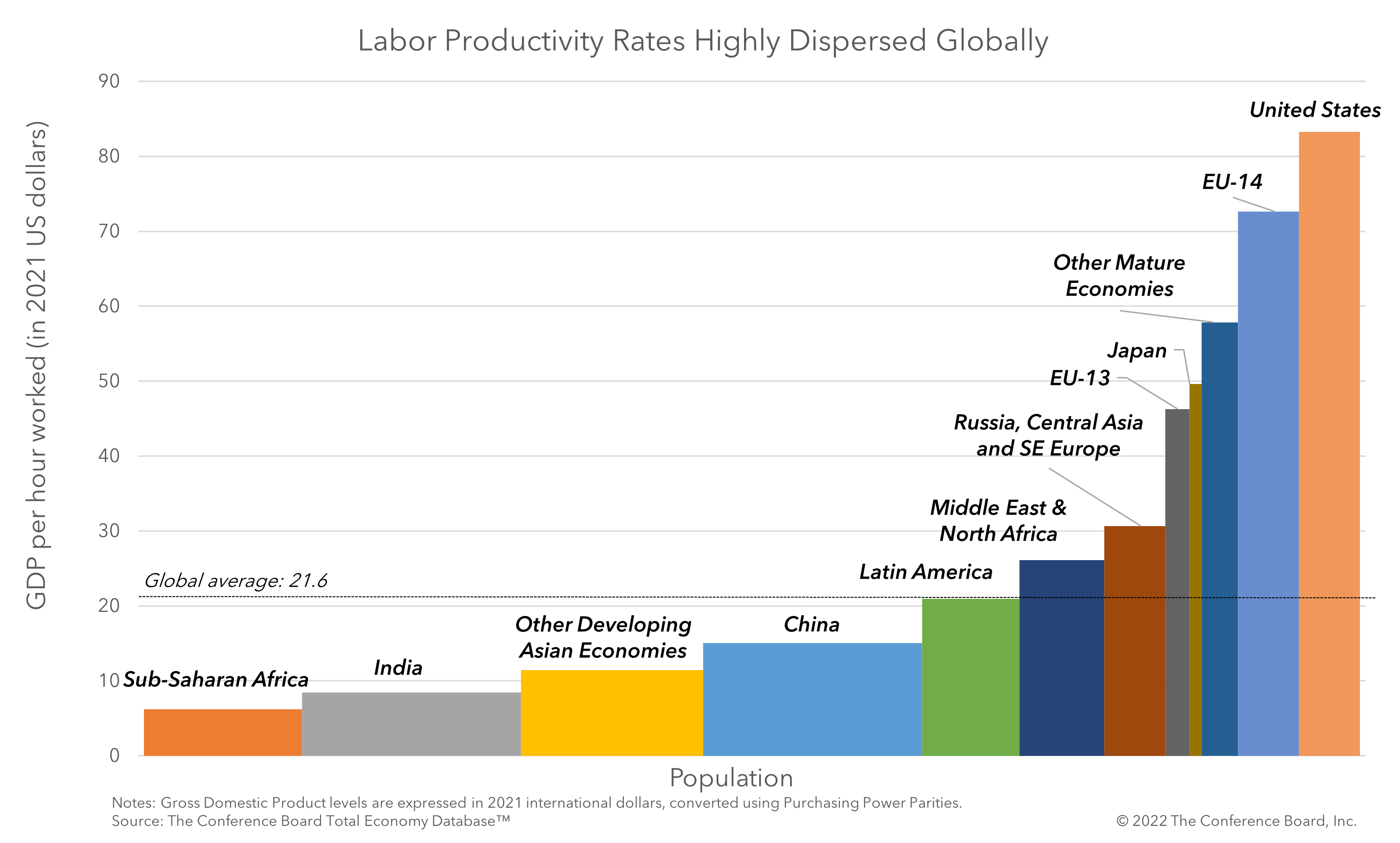
The US Productivity Advantage in a Shifting Global Economy
While economists worldwide grapple with weakening global economic conditions expected in 2026, the United States is positioned to capture disproportionate gains from artificial intelligence adoption. According to a World Economic Forum survey, American businesses expect to realize measurable productivity improvements within the next 12 months—a competitive edge that could reshape global economic dynamics as other nations struggle with macroeconomic uncertainty.
This divergence reflects a critical inflection point: while AI hype has dominated headlines for years, organizations are now shifting focus from experimentation to long-term value creation. The US economy's anticipated productivity acceleration suggests that American firms have moved beyond pilot projects and are deploying AI at scale.
What the Data Shows
The WEF findings paint a nuanced picture of AI's near-term impact:
- Immediate productivity gains: US companies expect measurable efficiency improvements within 12 months, contrasting sharply with global economic headwinds
- Sectoral variation: Productivity benefits will likely concentrate in knowledge-intensive industries where AI automation delivers the highest ROI
- Job market paradox: While near-term productivity gains are expected, longer-term employment risks are building
According to the WEF's analysis of AI paradoxes in 2026, this creates a temporal mismatch: near-term winners (companies and shareholders) face potential medium-term disruption (workforce displacement and wage pressure).
The Realism Shift
The move from AI hype to pragmatic deployment marks a turning point. Capgemini's research indicates that organizations are increasing AI investments with a focus on long-term value rather than chasing headlines. This disciplined approach explains why US productivity gains are expected to materialize—companies have moved beyond proof-of-concepts to operational integration.
However, this optimism must be tempered by broader risk assessments. The WEF's Global Risks Report 2026 highlights that businesses must navigate complex technology risks alongside economic uncertainty, suggesting that AI productivity gains could be offset by implementation challenges, cybersecurity threats, and regulatory friction.
The Competitive Landscape
The US advantage in near-term AI productivity gains reflects several structural factors:
- Capital availability: American tech companies and venture investors have deployed record AI funding
- Talent concentration: The US hosts the majority of AI research talent and expertise
- Enterprise readiness: Large US corporations have the infrastructure and resources to scale AI deployment rapidly
- Regulatory environment: Relative to Europe's stricter AI governance, the US permits faster experimentation
Yet this advantage may be temporary. As the WEF's comprehensive AI at Work report details, organizations globally are accelerating AI adoption, suggesting that competitive advantages will compress as best practices diffuse internationally.
What's at Stake
The productivity gains anticipated in the US economy over the next year will set the tone for global AI adoption patterns. If American companies successfully translate AI investments into sustained productivity improvements, other nations will intensify their own AI strategies. Conversely, if implementation challenges emerge or productivity gains disappoint, the current wave of AI investment could face skepticism.
For policymakers, investors, and business leaders, the message is clear: the next 12 months will determine whether AI becomes a transformative productivity tool or another technology cycle that fails to deliver on its promises.


