
AI Personal Trainer Market Poised to Triple by 2032
The AI personal trainer market is experiencing explosive growth, with projections showing a threefold expansion by 2032. This surge reflects broader shifts in sports technology and digital fitness adoption across consumer and enterprise segments.
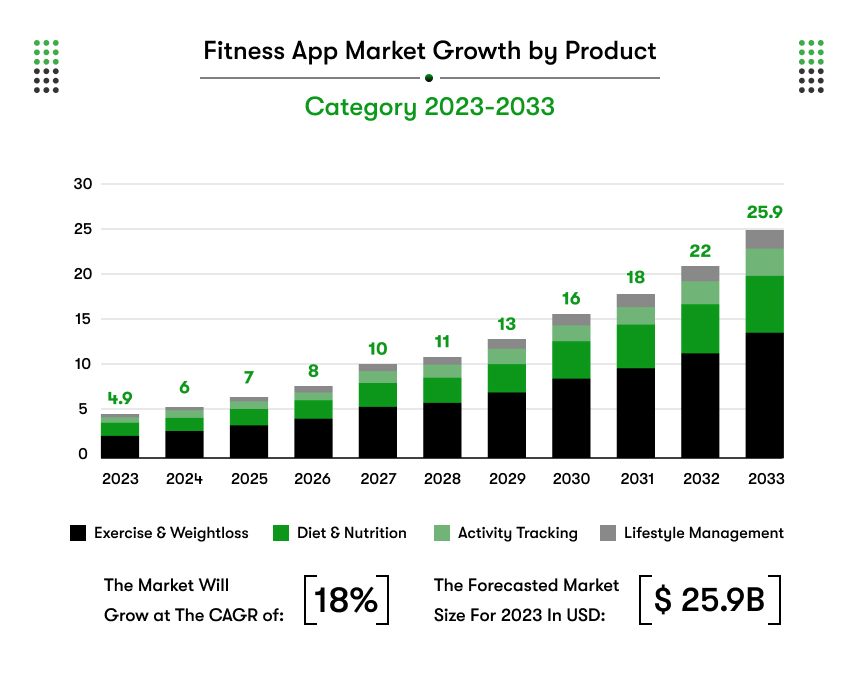
The Fitness AI Arms Race Is Heating Up
The personal training industry is undergoing a fundamental transformation. While traditional one-on-one coaching remains a premium service, artificial intelligence is democratizing personalized fitness guidance at scale. Market analysts now project the AI personal trainer segment will triple in size by 2032, signaling a major inflection point in how consumers approach health and wellness.
This growth trajectory sits within a larger ecosystem. The broader sports technology market is forecast to reach USD 87.55 billion by 2032, according to industry research. Within this landscape, AI-powered coaching tools represent one of the fastest-growing subcategories, driven by advances in machine learning, wearable integration, and consumer acceptance of digital fitness solutions.
What's Driving the Expansion?
Several factors are converging to accelerate adoption:
- Accessibility: AI trainers operate 24/7 without geographic constraints, reaching users in underserved markets
- Cost Efficiency: Subscription-based AI coaching costs a fraction of human trainers, expanding addressable markets
- Personalization at Scale: Machine learning algorithms analyze individual performance data to deliver customized workout plans and real-time feedback
- Integration with Wearables: Smartwatches and fitness trackers feed biometric data directly into AI systems, enabling context-aware coaching
- Post-Pandemic Digital Adoption: Consumer comfort with virtual fitness has normalized digital training modalities
The health and wellness market broadly is experiencing sustained growth, with digital fitness as a key growth vector. This creates tailwinds for AI personal trainer platforms competing for share in an expanding total addressable market.
Market Segmentation and Competitive Dynamics
The AI personal trainer space is fragmenting across multiple use cases:
Consumer-Facing Applications: Mobile apps and wearable integrations targeting individual fitness enthusiasts represent the largest segment. These platforms typically operate on freemium or subscription models, with AI providing workout recommendations, form correction via computer vision, and motivational coaching.
Enterprise and Corporate Wellness: Organizations are deploying AI coaching tools as part of employee wellness programs, reducing healthcare costs while improving engagement metrics.
Hybrid Models: Some platforms blend AI automation with human trainer oversight, positioning themselves as augmentation rather than replacement technologies.
The competitive intensity is rising. Established fitness platforms are integrating AI capabilities, while specialized startups are building purpose-built coaching engines. This mirrors broader patterns in AI infrastructure development, where foundational improvements in model efficiency and inference speed are enabling new applications.
The Coaching Industry Context
The traditional coaching industry itself is substantial. Market research on the coaching sector reveals a multi-billion dollar industry, but one characterized by high fragmentation and limited scalability. AI personal trainers address this constraint by automating routine coaching functions—workout programming, form feedback, progress tracking—while freeing human coaches to focus on behavioral coaching and complex client scenarios.
This isn't displacement; it's segmentation. Premium clients will continue paying for human expertise, while mass-market consumers gain access to capable AI alternatives at accessible price points.
What Comes Next
The tripling projection through 2032 assumes continued adoption curves and no major technological disruptions. Key variables to monitor include:
- Regulatory frameworks around health claims and liability
- Accuracy improvements in computer vision-based form analysis
- Integration depth with clinical health systems
- Consumer privacy expectations around biometric data
The AI personal trainer market's growth reflects a broader shift: fitness is becoming increasingly quantified, personalized, and technology-mediated. Whether this represents genuine health improvement or another wellness industry cycle remains an open question—but the market's conviction is clear.


