
Alibaba's HappyHorse-1.0 AI Model Leads Global Rankings
Alibaba's HappyHorse-1.0 AI model leads global rankings, surpassing ByteDance and Google. The model is set to transform AI video generation.
Alibaba's AI Breakthrough: HappyHorse-1.0
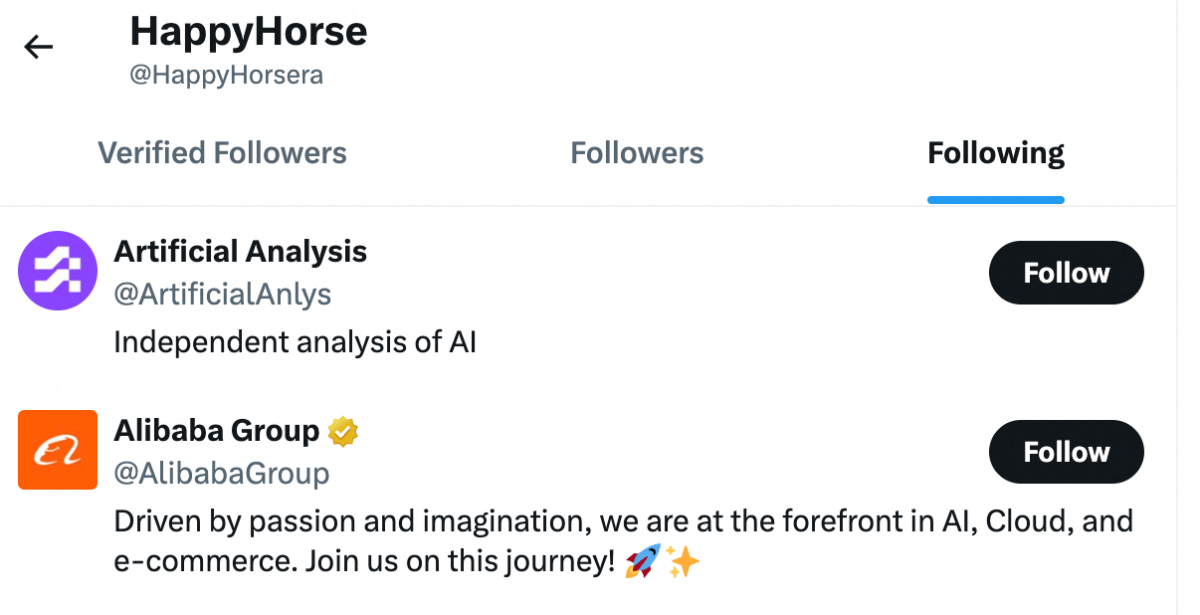
Alibaba Group has announced that its Token Hub division developed HappyHorse-1.0, a state-of-the-art AI video generation model. This model has anonymously topped international benchmarks, outperforming competitors such as ByteDance's Seedance 2.0 and Google's Veo 3 Fast. The announcement was made on April 10 via a new X account, highlighting China's growing influence in the AI sector. HappyHorse-1.0 now leads in text-to-video and image-to-video categories on the Artificial Analysis leaderboards (Yicai Global).
Stealth Launch and Features
Launched without fanfare, HappyHorse-1.0 generates synchronized audio-visual videos from text prompts. It gained viral traction online before Alibaba's official disclosure. The model is currently in internal testing, with its API expected to be released soon to enterprise clients via Alibaba's Cloud Intelligence unit. This aligns with Alibaba's strategy to capitalize on AI amid significant revenue growth in the sector (Stocktwits).
Leaderboard Performance
HappyHorse-1.0 has secured the top position in Artificial Analysis's Video Arena, surpassing ByteDance's Seedance 2.0 in Elo scores—a metric assessing model performance through human-rated battles. It also outperformed Kuaishou's Kling AI and Google's Veo 3 Fast, showcasing Alibaba's advancements in generative video technology (Yicai Global).
Historical Context and Development
Alibaba's journey in AI began with its Tongyi Qianwen large language models. The Wan series laid the groundwork for video generation, but HappyHorse-1.0's success indicates a new level of maturity. The Token Hub, established recently, consolidates these efforts, reporting ten consecutive quarters of triple-digit AI product revenue growth through Cloud Intelligence. This has expanded Alibaba's cloud market share in China to over 40% (Stocktwits).
Competitive Landscape
| Model | Developer | Key Strengths | Elo Score | Status |
|---|---|---|---|---|
| HappyHorse-1.0 | Alibaba Token Hub | Text/image-to-video, audio sync | #1 | Internal test, API soon |
| Seedance 2.0 | ByteDance | High-fidelity motion | #2 | Public |
| Kling AI | Kuaishou | Realistic physics | Top 3 | Commercial |
| Veo 3 Fast | Speed, integration | Top 5 | Limited access | |
| Sora | OpenAI | Pioneering quality | Discontinued | API only |
HappyHorse's advantage lies in cost-efficiency and China-optimized training data, challenging ByteDance's TikTok-driven video dominance (Stocktwits).
Strategic Timing and Market Impact
The timing of HappyHorse-1.0's release coincides with OpenAI's Sora web/app shutdown on April 26, creating a gap that Chinese models like HappyHorse are filling. Alibaba's Token Hub prioritizes AI as a "core strategic pillar," amid U.S.-China chip tensions, pushing firms towards domestic alternatives (Yicai Global).
China's projected $50 billion AI investment by 2026 fuels this momentum. Alibaba aims to leverage enterprise video for e-commerce ads, cloud services, and new interactive paradigms, despite potential regulatory scrutiny and competition from ByteDance's user base (Stocktwits).
Implications for AI and Markets
This development showcases China's growing AI capabilities, potentially challenging Western dominance in video genAI, projected to be worth over $10 billion by 2028. For Alibaba, it strengthens cloud revenue against competitors like AWS and Azure. Enterprises could use it for marketing and training simulations, though ethical concerns such as deepfakes remain.
Alibaba's move indicates a shift towards a multipolar AI landscape, where Eastern innovation competes with Silicon Valley on a global scale. Investors will be watching the API rollout closely to assess its long-term viability.


