
Google Relaunches AI Studio Flow with New Image, Video Tools
Google relaunches AI studio Flow with integrated image and video tools, enhancing creative capabilities and workflow.
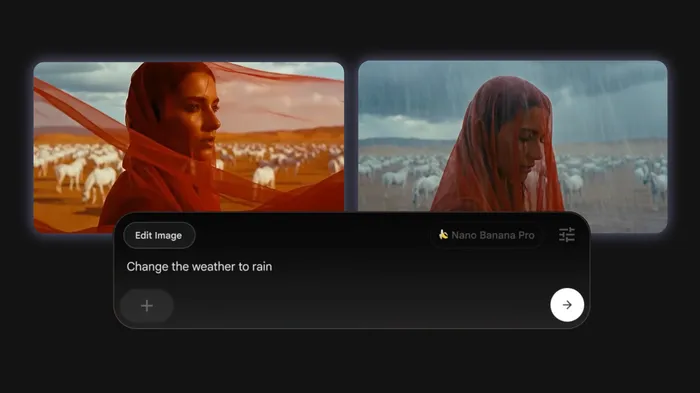
Google Relaunches AI Studio Flow with New Image, Video Tools
Google has relaunched its AI creative studio Flow with significant updates announced on February 26, 2026. The platform now integrates experimental image generation tools, Whisk and ImageFX, directly into the workflow, allowing seamless creation across text, images, and videos (Google Blog, The Decoder).
The enhancements, powered by Google's Nano Banana image model and Veo video generation, enable users to generate high-fidelity images for free and convert them into videos. The platform also includes intuitive editing tools like a lasso selector for natural language tweaks (Social Media Today). Flow is available at flow.google, free after signup with paid tiers for higher limits, and has already seen users create over 1.5 billion images and videos since its May 2025 debut (The Decoder).
Key New Features and Capabilities
The update transforms Flow into a comprehensive all-in-one workspace, eliminating the need to switch between tools. Core additions include:
-
Image-to-Video Generation: Nano Banana generates images that serve as direct inputs for Veo videos, allowing users to animate static shots or combine multiple images and style references for cohesive scenes. Image generation is free, reducing iteration costs (Google Blog).
-
Precision Editing Tools: A new lasso tool lets users select image areas and apply changes via text prompts, such as "remove the man" or "add Koi fish." Drawing directly on images is also supported. For videos, features extend clip lengths, add/remove objects, and control camera motions like pans and zooms (Social Media Today).
-
Asset Management Overhaul: A redesigned UI features an asset grid for organizing images, videos, and projects. Users can reference assets with the "@" symbol, create collections, and filter by recency or scene (Google Blog).
-
Seamless Migration: Starting March 2026, Whisk and ImageFX users can opt-in to transfer projects and assets to Flow, preserving workflows (The Decoder).
Flow's Track Record and Evolution
Launched in May 2025 as a video-first AI sandbox, Flow aimed to consolidate Google's visual AI tools into one interface (Social Media Today). Early adoption was strong, with the platform generating 1.5 billion assets in under a year, signaling robust demand for accessible AI creativity (The Decoder).
Google positions Flow as maturing from experimental to production-ready, with Nano Banana and Veo 3.1's "Ingredients to Video" reducing reliance on verbose text prompts through image-guided control (Find Articles).
Competitor Comparison
Flow enters a crowded AI creative tools market, but its multimodal integration sets it apart:
| Tool | Key Strengths | Limitations vs. Flow | Pricing |
|---|---|---|---|
| Adobe Firefly | Enterprise-grade integration with Photoshop/Premiere; high customization | Paid-only advanced features; less seamless image-to-video | Subscription ($20+/mo) |
| Runway ML | Advanced video editing, real-time collaboration | Steeper learning curve; higher costs for high-res outputs | $12-96/mo tiers |
| Midjourney | Superior image quality via Discord | No native video; community-dependent | $10-60/mo |
| Flow | Free image gen, unified workspace, Google ecosystem | Usage limits on free tier; early in video fidelity | Free/paid limits (The Decoder) |
Flow's free tier and asset migration give it an edge for casual creators and marketers, though Adobe leads in pro workflows (Social Media Today).
Why Now? Strategic Context
This relaunch aligns with Google's push to monetize AI creativity amid intensifying competition. Post-2025 AI boom, tools like Veo and Nano Banana have matured, enabling reliable multimodal outputs—critical as enterprises demand end-to-end pipelines (Google Blog). Market timing coincides with rising demand for AI visuals in marketing and content and Google's consolidation of Labs experiments into consumer products (Social Media Today).
Critics note potential over-reliance on Google's ecosystem, with some early users reporting Veo inconsistencies in complex scenes, though updates aim to refine this (The Decoder).
Broader Implications
For creators, Flow lowers barriers to professional-grade content, potentially disrupting stock media markets. Marketers gain rapid prototyping, while educators could leverage free tools for visuals. Google's move signals a shift toward AI as a creative OS, but raises questions on data ethics and job impacts in design fields. With 1.5 billion assets already, scaled adoption could amplify Google's AI dominance (AI Base News).
This upgrade cements Flow as a pivotal player, blending accessibility with power in an evolving AI landscape.


