
AI Accelerates Molecular Design by Tenfold, Reshaping Drug Discovery
A breakthrough AI system cuts molecular design time by 90%, fundamentally changing how researchers approach drug discovery and accelerating the path from concept to clinical trials.
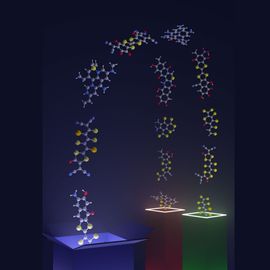
The Competitive Race for Faster Drug Discovery
The race to accelerate drug development just shifted into high gear. While pharmaceutical companies have long struggled with the bottleneck of molecular design—a process that can consume months or years—a new AI system is now delivering results ten times faster than conventional methods. This isn't merely an incremental improvement; it represents a fundamental restructuring of how researchers approach one of the most time-consuming phases of drug discovery.
The implications are staggering. In an industry where speed directly translates to cost savings and competitive advantage, AI is reshaping drug discovery at an unprecedented scale. Companies that can harness these tools will compress development timelines, reduce R&D expenses, and potentially bring life-saving therapies to patients years earlier than previously possible.
How the AI System Works
The breakthrough centers on generative AI models trained to understand molecular chemistry at a deep level. Rather than relying on trial-and-error or brute-force computational screening, these systems can predict viable molecular structures that meet specific therapeutic criteria—essentially learning the "language" of chemistry.
Key capabilities include:
- Rapid iteration: Testing thousands of molecular configurations in hours instead of months
- Constraint optimization: Balancing efficacy, safety, and manufacturability simultaneously
- Pattern recognition: Identifying promising chemical scaffolds based on historical data and known drug properties
According to recent analysis, agentic AI systems are now shifting R&D workflows toward predictive drug pipelines, fundamentally changing how research teams operate.
Industry Transformation Underway
The impact extends beyond speed. New tools and tougher economics are defining drug discovery in 2026, forcing organizations to adopt AI or risk falling behind. Major research institutions are already deploying these systems. MD Anderson Cancer Center, for example, is using AI-driven approaches to accelerate the path to new cancer therapies, demonstrating real-world clinical applications.
Healthcare leaders at Mass General Brigham are making predictions about artificial intelligence's role in transforming medicine, with molecular design acceleration cited as a cornerstone technology.
What This Means for Drug Development
The tenfold acceleration has cascading effects across the entire pipeline:
Faster clinical entry: Compounds that once took 18-24 months to design can now be ready in weeks, accelerating the path to human trials.
Cost reduction: Fewer computational cycles and less human labor mean lower per-molecule design costs, making rare disease research more economically viable.
Expanded screening: Researchers can now explore chemical space more comprehensively, potentially discovering novel drug candidates that traditional methods would have missed.
Personalized medicine: The speed enables rapid design of patient-specific or disease-variant-specific therapeutics.
The Broader Context
The scientific community is increasingly recognizing AI's transformative potential in molecular design, with peer-reviewed research validating the approach. However, challenges remain: regulatory frameworks must evolve to accommodate AI-designed drugs, and validation protocols need refinement to ensure safety and efficacy.
The competitive landscape is intensifying. Organizations that integrate these systems into their discovery workflows will gain measurable advantages in speed, cost, and innovation capacity. For patients waiting for new treatments, this acceleration could mean the difference between hope and despair.
This is no longer a question of whether AI will transform drug discovery—it's already happening. The question now is how quickly the industry can scale these capabilities and how soon we'll see AI-designed molecules reach patients in meaningful numbers.


