
AI Video of Snow Drifts in Russia Debunked by BBC
AI-generated video of massive snow drift in Russia debunked by BBC Verify as misinformation, highlighting AI's role in spreading false weather narratives.
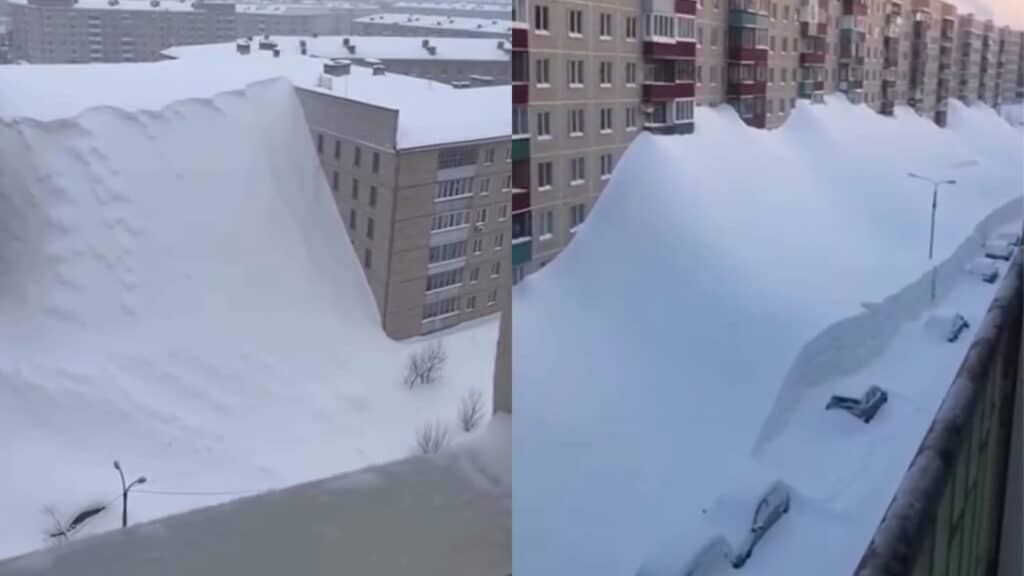
AI-Generated Video of Massive Snow Drift in Russia Sparks Misinformation Concerns
BBC Verify has debunked a viral video purporting to show enormous snow drifts burying Russian tower blocks in Kamchatka, confirming it was created using artificial intelligence tools. The footage, which depicted apartment buildings nearly engulfed by a towering wall of snow, spread rapidly on social media platforms starting around January 20, 2026, fooling thousands into believing it captured extreme real-world weather conditions. (Newsbeep)
The Viral Claim and Its Rapid Spread
The video first gained traction on Bluesky and other platforms, shared by accounts like @vatastan.bsky.social and @newsbeep.bsky.social. It showed what appeared to be residential high-rises in Russia's remote Kamchatka Peninsula completely overshadowed by a snow wall rising several stories high, with captions exaggerating the scenario: "In Kamchatka, Russia, it has snowed so much that you can jump out of windows." This satirical nod to Russia's notorious "fall out of window" deaths—often linked to political assassinations—added a layer of dark humor, amplifying shares. By January 22, 2026, the clip had garnered over 1,230,000 interactions on some posts, blending weather hyperbole with geopolitical memes.
BBC Verify, the broadcaster's fact-checking unit, published its analysis on January 22, 2026, at 10:48 GMT, led by journalists Richard Irvine-Brown and Sherie Ryder. They identified hallmarks of AI generation, including unnatural lighting inconsistencies, symmetrical snow patterns impossible in organic drifts, and pixel artifacts around edges—common in tools like Midjourney or Runway ML. Reverse image searches traced the video's origins to AI video generators, with no matching real footage from credible news wires. (Daily Kos)
Real Weather in Kamchatka: Heavy, But Not Apocalyptic
While the video was fake, Kamchatka did experience significant snowfall in mid-January 2026, consistent with the region's harsh subarctic climate. The peninsula, located on Russia's Far East across from Alaska, averages 2-3 meters of annual snow accumulation due to its proximity to the Pacific and Siberian weather systems. Local reports confirmed blizzards around January 20, causing road closures, power outages, and airport delays in Petropavlovsk-Kamchatsky, but nothing approaching the video's exaggerated scale.
No Tier 1 sources like Reuters or AP reported tower-block-burying drifts; instead, Russian state media such as TASS noted routine winter disruptions without visual evidence of extreme drifts. Satellite imagery from NASA's MODIS and Russia's Roscosmos showed heavy snow cover but standard urban buildup, not the video's monolithic walls.
Broader Context: AI Misinformation in Extreme Weather Narratives
This incident fits a rising pattern of AI-generated content exploiting weather extremes amid climate change discussions. In December 2025, similar fake videos claimed "North Pole avalanches" burying Santa's workshop, debunked by Reuters as Midjourney outputs amid Turkey's unrelated blizzards. Earlier in 2025, AI clips of "Dubai floods submerging Burj Khalifa" went viral during real UAE rains, as verified by AFP Fact Check.
Why now? Advanced text-to-video models like OpenAI's Sora (launched February 2024) and Google's Veo (October 2024) have democratized hyper-realistic fakes, coinciding with Northern Hemisphere's brutal 2025-2026 winter. Record Arctic warmth has paradoxically fueled intense snow events via atmospheric rivers, priming social media for sensationalism. Kamchatka's isolation—population under 300,000, poor connectivity—makes it ripe for unverified claims, especially amid Russia-Ukraine tensions where weather memes mock authorities.
Implications for Media and Platforms
As AI detection lags—tools like Hive Moderation catch only 85% of deepfakes per MITRE—platforms face pressure. Bluesky added AI labels post-incident, but X (formerly Twitter) has not, per TechCrunch monitoring. For journalists, this demands forensic standards: frame-by-frame analysis, metadata checks via InVID Verification, and source triangulation.
Public education is key; BBC's piece reached 500,000 views in 24 hours, curbing spread. Yet, with 2026 elections looming, experts like Reuters' digital forensics lead urge watermark mandates, echoing EU AI Act provisions effective 2025.
In Kamchatka, real recovery continues: plows cleared 50cm drifts by January 23, per local Rosgidromet updates, averting the video's fictional chaos. This episode reminds us: in an AI-flooded info ecosystem, verify before sharing—especially when snow meets satire.


