
Alibaba's Qwen AI Model Challenges OpenAI and Google in Global Competition
Alibaba's latest Qwen AI model demonstrates superior performance metrics against OpenAI and Google competitors, signaling a major shift in the global AI landscape dominated by Western tech giants.
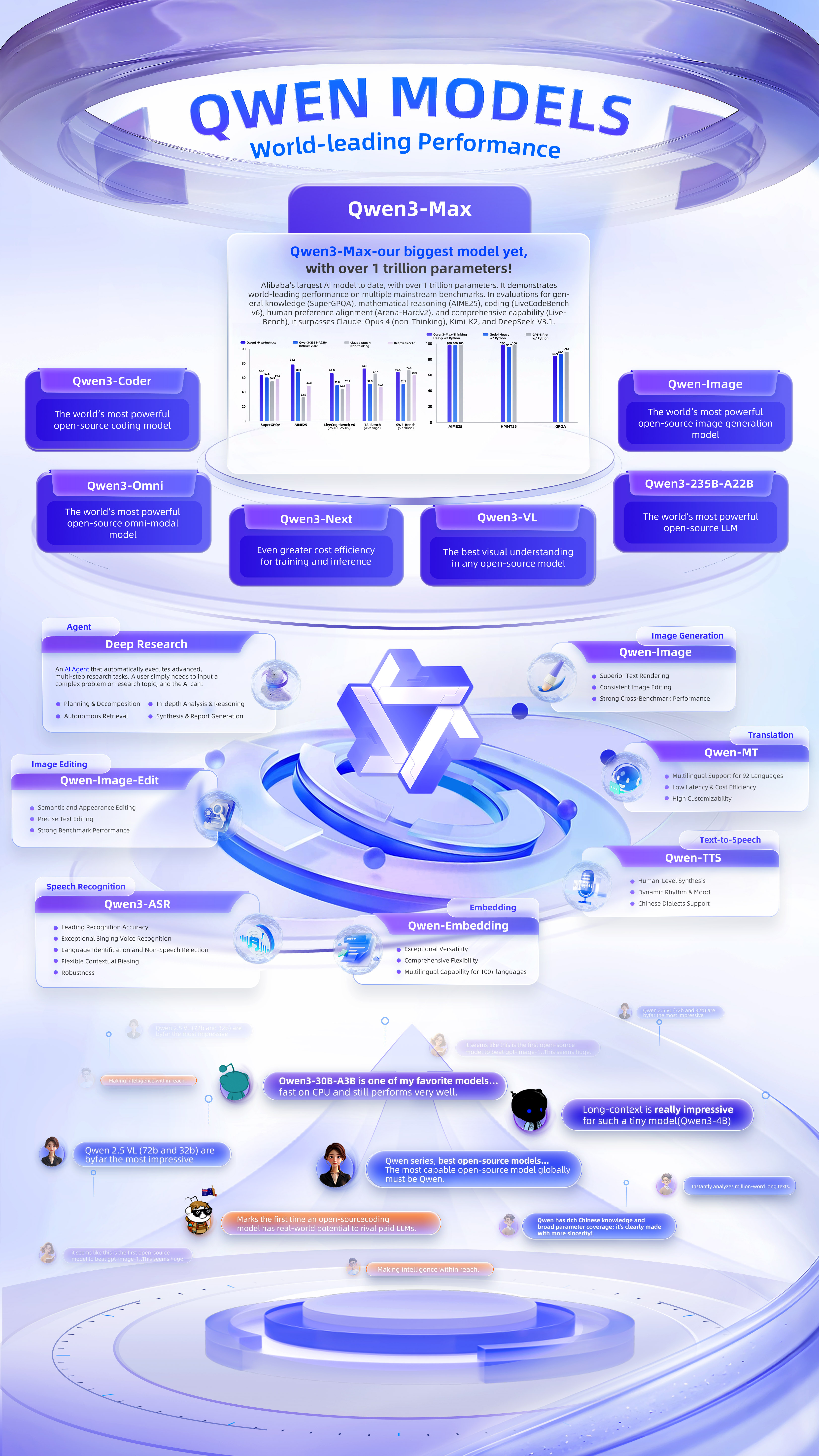
The AI Supremacy Battle Just Got More Competitive
The race for artificial intelligence dominance is no longer a two-horse competition. Alibaba's latest Qwen model has achieved benchmark performance that rivals and, according to company claims, surpasses leading models from OpenAI and Google. This development marks a watershed moment in the global AI competition, where Chinese tech companies are closing the gap with Silicon Valley incumbents at an accelerating pace.
According to industry trend analysis, the performance metrics landscape has shifted dramatically over the past 18 months. Alibaba's Qwen family now occupies a prominent position in comparative evaluations, challenging the narrative that Western AI models hold an insurmountable lead.
Understanding Qwen's Technical Advantages
Alibaba's Qwen model demonstrates several key technical improvements:
- Multimodal capabilities: The model handles text, vision, and image generation tasks with integrated architecture
- Efficiency metrics: Reduced computational requirements compared to competing models of similar capability
- Localization strengths: Optimized performance for Asian language processing and regional use cases
- Open ecosystem approach: Integration with Alibaba's broader Model Studio platform
As detailed in Alibaba's Qwen statistics, the model has been trained on substantially larger datasets and refined through extensive real-world deployment across Alibaba's e-commerce ecosystem.
The Broader Competitive Landscape
The emergence of Qwen as a credible competitor reflects a larger trend in AI development. Analysis of global LLM comparisons shows that Chinese AI models are no longer experimental projects—they're production-ready systems deployed at scale.
This competitive pressure extends beyond Alibaba. Other Chinese firms like Moonshot have also unveiled new AI models with competitive performance characteristics, suggesting a broader ecosystem maturation.
What This Means for the Market
The implications of Alibaba's advancement are significant:
- Reduced dependency: Organizations can now choose from multiple high-performance options rather than defaulting to OpenAI or Google
- Price competition: Multiple capable competitors typically drive down costs and improve service quality
- Regional optimization: Models optimized for specific languages and use cases may outperform one-size-fits-all approaches
- Geopolitical considerations: The shift toward multiple regional AI leaders has implications for data sovereignty and supply chain resilience
According to recent industry rankings, Qwen now appears consistently in top-tier LLM comparisons alongside GPT-4 and other leading models.
Looking Ahead: 2026 and Beyond
Industry predictions for 2026 suggest that AI model performance will continue converging across vendors, with differentiation shifting toward specialized applications, integration capabilities, and cost efficiency rather than raw benchmark scores.
The question facing enterprises is no longer whether alternatives to Western AI models exist—they clearly do. The question is whether Qwen and similar models meet specific organizational requirements for performance, compliance, and integration.
The Verdict
Alibaba's Qwen represents a genuine inflection point in AI competition. While benchmark claims require independent verification and real-world performance testing, the trajectory is clear: the era of Western dominance in large language models is transitioning toward genuine multipolarity. Organizations evaluating AI infrastructure should now conduct serious technical assessments of Qwen alongside established options, rather than treating it as a secondary alternative.
The competitive pressure this creates benefits the broader AI ecosystem through accelerated innovation, improved accessibility, and more diverse technological approaches to solving complex problems.


