
China's AI Adoption Slows Job Displacement Amid Regulations
China's AI adoption slows job displacement due to regulatory barriers and economic pressures, maintaining employment stability despite global trends.
China's AI Adoption Slows Job Displacement Amid Regulations
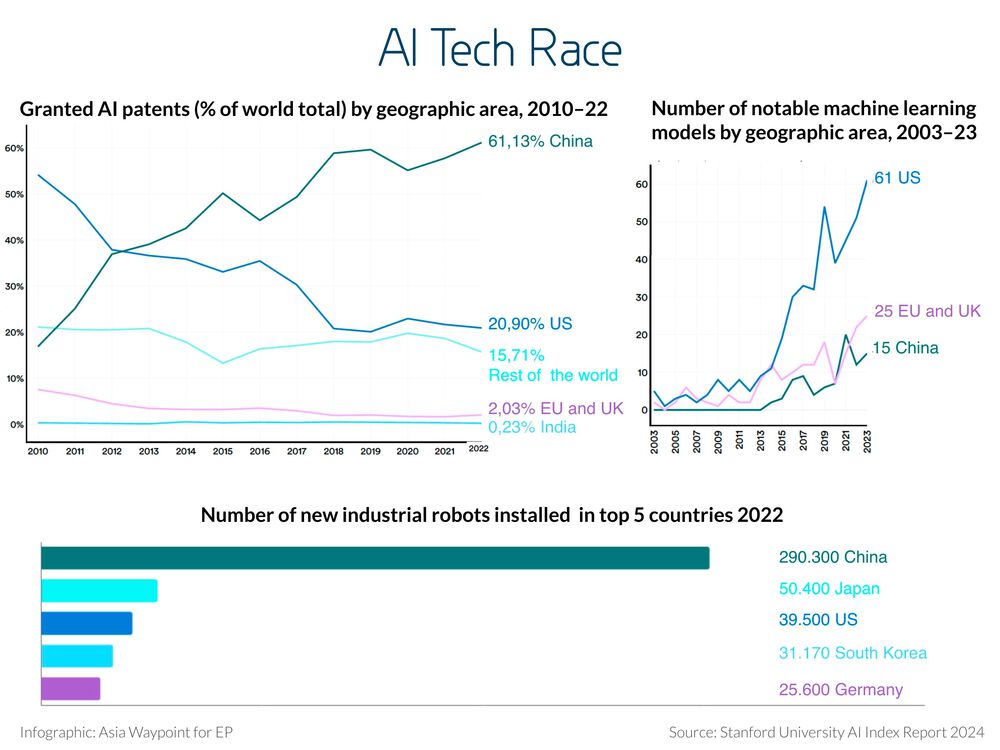
China's rapid embrace of artificial intelligence (AI) has not yet triggered widespread job displacement, unlike in the U.S., where tech layoffs make headlines. Engineers and white-collar workers in China remain relatively insulated, thanks to regulatory hurdles, economic pressures, and a unique labor market structure that prioritizes employment stability over efficiency gains, according to CNBC's latest The China Connection newsletter (CNBC).
Key Reasons Behind China's AI Job Insulation
The CNBC analysis highlights several factors shielding Chinese workers from AI-driven layoffs:
-
Regulatory Barriers: Chinese firms face stringent regulatory barriers to automation. Labor laws and government directives emphasize maintaining employment levels, making it costly and politically risky to replace humans with AI systems. For instance, state-owned enterprises and large private firms must navigate approvals for mass layoffs, often tied to social stability goals.
-
Economic Transition: China's economy is still transitioning from labor-intensive manufacturing, where AI adoption lags due to high upfront costs and the need for customized solutions. While generative AI tools like DeepSeek have gained traction, they supplement rather than supplant roles in coding, design, and content creation.
-
Youth Unemployment Pressures: Youth unemployment pressures (hovering around 15-20% in recent years) have prompted Beijing to discourage automation narratives. State media promotes AI as a skill-enhancer, not a job-killer, amid post-COVID labor market strains (Matt Sheehan).
Rising Fears and Policy Responses
Despite current insulation, anxieties about AI job loss are surging in China. Over the past two years, public discourse—from social media to policy papers—has amplified concerns about structural unemployment. Ordinary citizens, AI experts, and even Communist Party of China (CCP) officials express worry, reflected in state media and documents like the 2024 AI governance guidelines.
Matt Sheehan, a Sinovation Ventures analyst, notes that these fears stem from China's recent economic slowdown: youth joblessness remains "stubbornly high," career mobility is stagnant, and AI hype serves as a "psychological escape valve." Platforms like Douyin push narratives of "learn AI, land a high-paying job," masking deeper panic.
Historical Context and Track Record
China's AI journey provides critical backstory. Since launching the "New Generation AI Development Plan" in 2017, Beijing has invested over $15 billion annually, propelling firms like Baidu, Alibaba, and Tencent into global contention. Yet, past performance shows measured job impacts:
- Pre-2023: AI focused on low-skill tasks (e.g., factory inspection), displacing few amid 8% GDP growth.
- 2023-2025: Generative AI boom spiked adoption, but regulations capped layoffs; white-collar productivity rose 15-25% without cuts.
- 2026 Outlook: With GDP growth at ~4.5%, experts predict gradual displacement in routine coding/white-collar roles by 2028.
Competitor Comparison: China vs. U.S. and Beyond
| Aspect | China | U.S. (Silicon Valley) | EU |
|---|---|---|---|
| AI Adoption Speed | High (90% engineers use daily) | Highest (layoff-linked) | Moderate (GDPR slows) |
| Job Displacement | Low (regs protect) | High (10k+ cuts in 2024) | Low (strong unions) |
| Unemployment Rate | 5.1% overall, 16% youth | 4.1% overall, 12% youth | 6.5% overall |
| Gov't Stance | Stability-first | Efficiency-driven | Ethics-focused |
Data compiled from Reuters and Bloomberg reports. China's edge? State capitalism enforces "human-in-the-loop" models, unlike U.S. venture-driven cuts.
Implications for Global Markets
For multinational firms, China's model signals caution: AI rollouts must factor in local regs, potentially slowing global standards. Investors note upside—Baidu shares up 12% in 2026 on balanced growth—but risks loom if unemployment spikes.
In sum, China's AI restraint buys time but tests long-term agility. As one expert puts it: "They're worried about the worry itself."


