
Claude AI Faces Persistent Reliability Crisis as March Outages Escalate
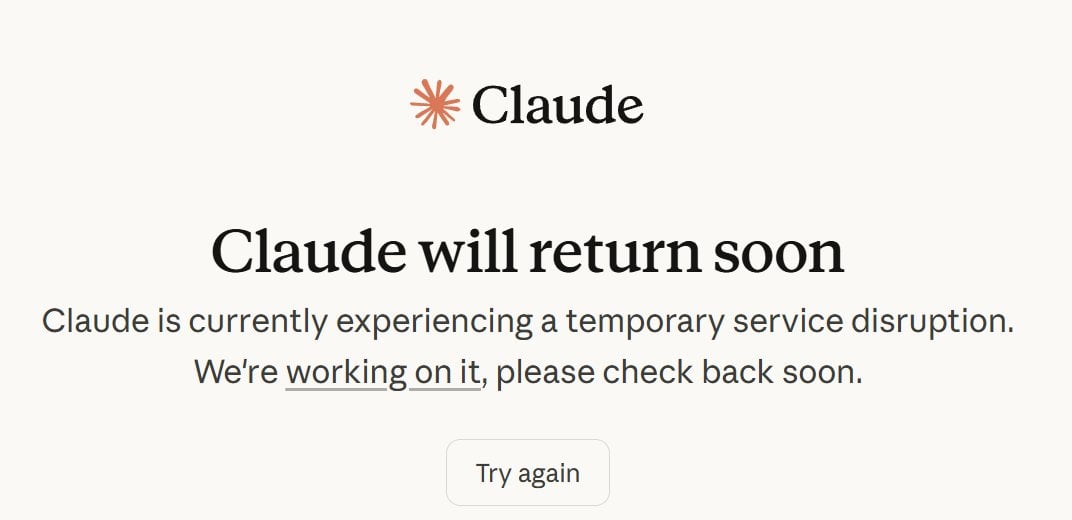
Anthropic's Claude AI continues to struggle with widespread outages and service disruptions in March, raising serious questions about enterprise reliability and the maturity of AI infrastructure as organizations increasingly depend on the platform.
The Reliability Reckoning for Enterprise AI
As AI adoption accelerates across enterprises, Claude's ongoing service disruptions are exposing a critical vulnerability in the infrastructure that organizations are betting their workflows on. While competitors like OpenAI's ChatGPT and Google's Gemini have established stronger uptime records, Anthropic's Claude continues to experience significant outages that are testing user patience and raising questions about the platform's readiness for mission-critical deployments.
The March outages represent more than isolated technical hiccups—they signal a broader pattern of infrastructure strain that Anthropic is still struggling to resolve.
What's Happening: The Outage Pattern
Recent incidents have affected Claude users globally, with reports of login failures, error messages, and significantly degraded response times. The disruptions aren't limited to brief blips—some users have experienced extended periods of unavailability or severely throttled service.
Key symptoms reported:
- Complete login failures across web and API interfaces
- Slow response times and timeouts for active sessions
- Rate limiting errors affecting batch processing workflows
- Inconsistent service availability across geographic regions
Enterprise Implications: A Trust Problem
For organizations that have integrated Claude into production systems, these outages carry real operational costs. The March 2026 outage has prompted serious discussions about enterprise AI reliability, with IT teams questioning whether Claude can serve as a primary tool for business-critical applications.
The stakes are particularly high because:
- Workflow disruption: Teams relying on Claude for content generation, coding assistance, and analysis face unexpected downtime
- SLA concerns: Enterprise customers expect defined service level agreements; Claude's public status page hasn't always provided clear transparency
- Competitive pressure: Organizations evaluating AI platforms are now factoring reliability into their decision matrices
- Cost implications: Outages force teams to seek workarounds or fall back to less efficient alternatives
The Broader Context
Claude's reliability issues arrive at an awkward moment for Anthropic. The company has positioned itself as the responsible AI player, emphasizing safety and thoughtful deployment. Yet persistent infrastructure problems undermine that narrative. Competitors have invested heavily in redundancy, geographic distribution, and failover systems—investments that appear to be paying dividends in uptime metrics.
The technical challenges likely stem from rapid scaling demands. Claude's user base has grown exponentially, and the computational requirements for running large language models at scale are immense. However, user expectations are clear: reliability must match capability.
What's Next?
Anthropic has not publicly detailed a comprehensive remediation plan for the recurring outages. The company's engineering team is presumably working to identify root causes and implement fixes, but the lack of transparent communication has frustrated users and raised concerns about the company's operational maturity.
For enterprises considering Claude adoption, the current situation demands caution. While the model itself remains powerful and capable, the infrastructure supporting it needs demonstrable improvement before organizations should treat it as a primary dependency for critical workflows.
The battle for AI dominance isn't just about model quality anymore—it's about reliability, transparency, and operational excellence. Claude's stumble here is a reminder that technical sophistication means little if users can't consistently access the service.


