
Elon Musk Launches $20B Terafab Chip Project in Austin
Elon Musk announces $20B Terafab chip project in Austin, uniting Tesla, SpaceX, and xAI for AI and robotics advancements.
Elon Musk Launches $20B Terafab Chip Project in Austin
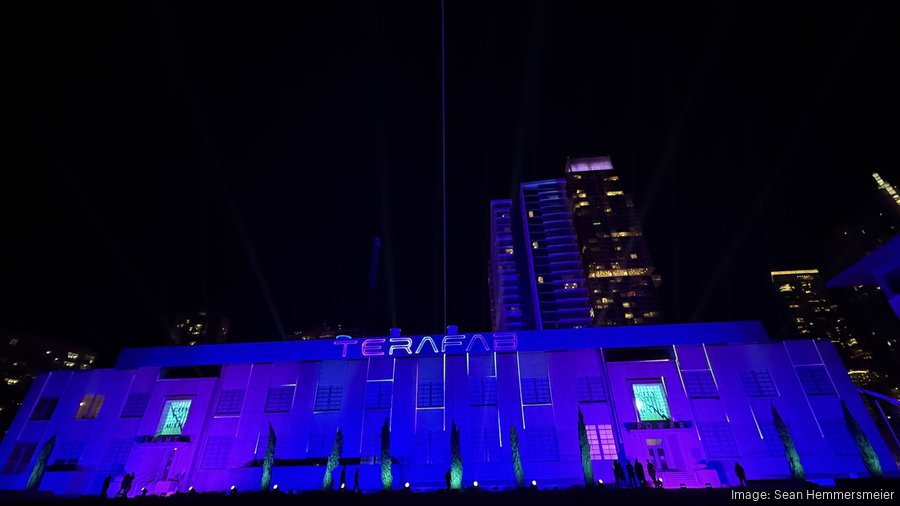
Elon Musk announced on March 21, 2026, in downtown Austin, Texas, that his companies—Tesla, SpaceX, and xAI—will launch the Terafab initiative. This massive semiconductor fabrication facility aims to produce advanced chips for AI, robotics, and space data centers. Described by Musk as an "epic" endeavor, the project kicks off with a $20 billion advanced technology fab in Austin, set to begin production in 2027. It is positioned as a response to surging chip demand amid global shortages (Source).
Project Details and Timeline
Musk clarified that Terafab begins modestly as an advanced technology fab in Austin, jointly operated by Tesla and SpaceX, with xAI integration for AI-specific needs. The facility promises versatility, capable of fabricating diverse chips rather than specializing in a single node like traditional foundries. Musk emphasized urgency: "That rate [chip supply] is much less than we’d like... We either build the Terafab, or we don’t have the chips, and we need the chips, so we build the Terafab" (Source).
Construction draws on Austin's growing semiconductor ecosystem, where Tesla already partners with Samsung's nearby facility for automotive chips. Full operational status could take years, mirroring industry norms for fabs requiring tens of billions in investment and complex equipment from suppliers like ASML and Applied Materials. Musk claimed the project could boost global chip production fivefold annually once scaled (Source).
Past Performance and Track Record
Musk's semiconductor ventures build on mixed but ambitious precedents. Tesla's Dojo supercomputer, powered by custom D1 chips, faced delays; initial 2021 promises of 362 exaflops by 2024 fell short, with production scaling only in 2025 amid yield issues. SpaceX relies on radiation-hardened chips for Starship, often custom-designed but sourced externally (Source).
xAI, launched in 2023, has burned through $6 billion for its Memphis Colossus cluster (100,000 Nvidia H100 GPUs), highlighting dependency on third-party silicon. Tesla's Optimus robot, unveiled in 2021, remains in low-volume pilots, with chip bottlenecks cited for stalled mass production targets of 1 billion units annually by 2030 (Source).
Competitor Comparison
| Company/Fab | Investment | Focus | Timeline | Capacity Target |
|---|---|---|---|---|
| Musk's Terafab | $20B initial | AI, robotics, space chips (versatile nodes) | Production 2027 | 1 terawatt compute/year |
| TSMC (N2P/A16 nodes) | $100B+ global (2024-2028) | Leading-edge AI (e.g., Nvidia Blackwell) | Mass prod 2026 | 2nm by 2025, A16 2026 |
| Samsung Austin | $17B expansion | Automotive/AI (3nm/2nm) | Online 2024-2026 | Partners with Tesla already |
| Intel Ohio | $20B | Foundry for all (18A node) | Production 2027 | U.S. onshoring push |
| Nvidia/TSMC | Custom H200/B100 | AI GPUs only | Ongoing | 1M chips to Amazon by 2027 |
Terafab differentiates via multi-company synergy and space-grade resilience, but lags pure-play foundries like TSMC in node shrinks (e.g., 2nm). Samsung's Austin plant, already collaborating with Tesla, poses both partnership opportunity and local rivalry (Source).
Why Now? Strategic Context
The timing aligns with acute AI chip scarcity. Nvidia's dominance leaves hyperscalers waiting 12-18 months for H100/B200 GPUs, with Musk decrying supply as "much less than we’d like." U.S. CHIPS Act subsidies ($39B grants) incentivize domestic fabs, boosted by Texas' tax breaks—Governor Abbott attended to signal state support (Source).
Musk's empire faces inflection: Tesla's robotaxi delay to October 2026 hinges on better inference chips; xAI eyes 1 million-GPU clusters; SpaceX's Starlink requires low-latency space data centers. Global peers like Samsung ($73B AI spend) and Micron (heavy fab investments) signal a chip arms race, with Terafab positioning Musk to capture robotics' projected $200B market by 2035.
Skeptical Voices and Challenges
Critics question feasibility. Building a cutting-edge fab demands 1,000+ PhDs and years of ramp-up; past Musk ventures like the Tesla Semi overpromised. "Epic" claims of fivefold global output ignore physics—extreme ultraviolet lithography alone costs $300M per machine (Source).
Analysts note Texas' water/electricity strains could delay timelines, echoing Intel's challenges. Yet, if successful, Terafab elevates Austin as a U.S. chip hub, rivaling Arizona, and insulates Musk from TSMC's Taiwan risks.
Broader Implications
Terafab could reshape U.S. manufacturing, creating 5,000+ jobs and spurring suppliers. For Musk's triad, it enables Optimus at $20K/unit, Mars-bound compute, and Grok surpassing GPT-5. Success hinges on execution amid $20B capex, but it cements Musk's bid for AI supremacy.


