
Google AI Studio Democratizes App Development for Non-Coders
Google AI Studio removes technical barriers to app creation by enabling developers and beginners to build functional applications using natural language prompts instead of traditional coding.
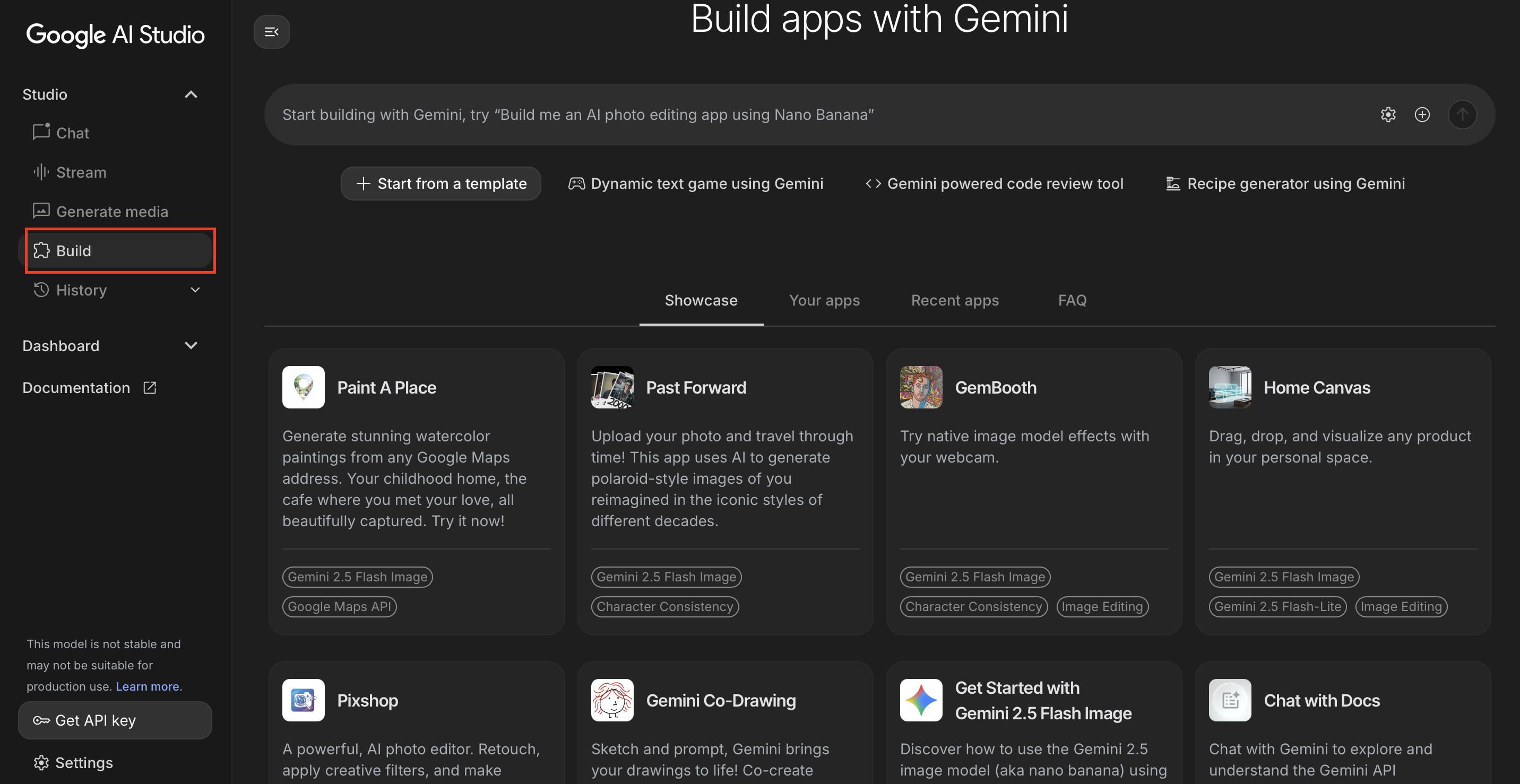
The Democratization of App Development
The landscape of software development is shifting. While traditional coding has long remained the gatekeep of application creation, Google AI Studio is streamlining the process by enabling natural language app development, allowing beginners and non-technical users to build functional applications without deep programming expertise. This represents a fundamental change in how applications enter the market—one where the barrier to entry is no longer years of computer science education.
Google's approach taps into a broader industry trend: generative AI is becoming the great equalizer in software development. By leveraging large language models and intuitive interfaces, AI Studio transforms the development workflow from syntax-heavy coding to conversational prompting, where users describe what they want and the platform generates the underlying logic.
How Natural Language Prompting Works
At its core, Google AI Studio operates on a simple principle: describe your application in plain English, and the AI handles the technical translation. Users can prompt in English to guide AI behavior, making the development process more accessible to entrepreneurs, domain experts, and business analysts who understand problems but lack coding skills.
The platform integrates several key capabilities:
- Prompt Engineering: Users craft natural language instructions that define application behavior
- Parameter Tuning: Fine-tuning parameters allows developers to optimize performance and accuracy
- Grounding with Search: Applications can be grounded with real-time Google Search data, ensuring responses remain current and factually accurate
- Code Generation: AI Studio can generate functional code for various use cases, reducing manual coding overhead
Competitive Positioning in the AI Development Space
The emergence of AI-powered development platforms has created a crowded field. Comparisons between Google AI Studio, Lovable, and Replit show distinct approaches to democratizing development, each targeting different user personas and use cases. Google's advantage lies in its integration with Vertex AI and access to Gemini models, providing enterprise-grade capabilities alongside beginner-friendly interfaces.
This positioning matters because it signals Google's commitment to capturing both the hobbyist and professional segments of the development market simultaneously.
From Concept to Deployment
Getting started requires minimal friction. Google provides straightforward onboarding pathways for users of all skill levels, and comprehensive deployment guides help beginners move from prototype to production. The deployment process itself has been simplified with step-by-step guides designed specifically for beginners, removing another traditional barrier to market entry.
The workflow typically follows this pattern:
- Define application requirements in natural language
- Iterate on prompts and parameters based on output quality
- Test functionality within the platform
- Deploy to production with integrated hosting options
What This Means for the Developer Ecosystem
The implications extend beyond individual developers. By lowering the technical barrier, Google AI Studio could accelerate innovation cycles, enabling rapid prototyping and experimentation. Organizations can validate ideas faster, and domain experts can build specialized tools without waiting for engineering resources.
However, this democratization also raises questions about code quality, security, and maintainability at scale. As more non-technical users generate applications, the industry will need to establish new standards for testing, documentation, and governance.
The Broader Trend
Google AI Studio represents a larger shift toward AI-assisted development as the default mode of software creation. Rather than replacing developers, these tools augment human capability, allowing technical professionals to focus on architecture and complex problem-solving while AI handles routine implementation tasks.
The real test will be whether these platforms can maintain quality and security standards as adoption scales beyond early adopters to mainstream users.


