
Google DeepMind Debuts AI-Driven Animation at Sundance
Google DeepMind premieres AI-driven animation "Dear Upstairs Neighbors" at Sundance, blending traditional techniques with AI for unique visuals.
Google DeepMind's AI-Enhanced Animation Debuts at Sundance
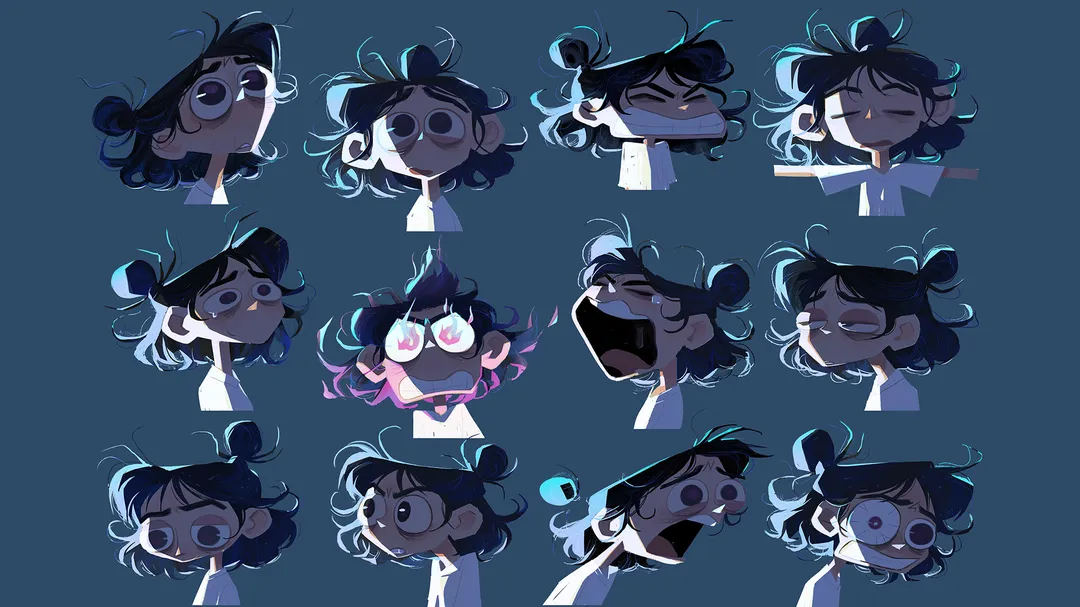
Google DeepMind premiered its animated short film "Dear Upstairs Neighbors" at the 2026 Sundance Film Festival's Story Forum on January 27. The film blends traditional animation techniques with AI technology to create unique expressionistic visuals while maintaining artistic control. Directed by Pixar alum Connie He, the film explores the story of Ada, a young woman dealing with noisy neighbors, through evolving painterly styles that transition from reality to abstract expressionism (Google Blog).
Collaboration Between Animators and AI Researchers
The project brought together industry veterans and Google DeepMind researchers. Key contributors included supervising animator Cassidy Curtis, production designer Yingzong Xin, VFX supervisor Sarah Rumbley, composer Yung Spielburg, and producer Márcia Mayer. Xin's concept art and Curtis's animation expertise were pivotal in crafting the film's unique visual style (Animation Magazine).
AI Technology in Animation
Traditional animation faced challenges with the film's demanding styles, which were crucial for conveying Ada's emotional journey. Animators like Mattias Breitholtz and Steven Chao provided inputs that were transformed by DeepMind researchers using novel video-to-video workflows. These workflows fine-tuned AI models such as Imagen and Veo to enable frame-by-frame stylization while allowing artists to maintain control (TechBuzz).
The result was a 4K-resolution "living painting" that showcased the film's rhythmic intensity, with texture changes enhancing action sequences.
Google DeepMind's Animation Track Record
Google DeepMind's venture into AI animation builds on previous advancements. Veo, introduced in 2024, initially generated high-fidelity videos from text prompts. However, earlier versions lacked customization for artistic styles, a limitation addressed in this project. The film marks DeepMind's first full short film, evolving from research prototypes to festival-ready output (TechBuzz).
Competitor Comparison
| Company/Model | Key Strengths | Limitations vs. DeepMind's Approach | Example Projects |
|---|---|---|---|
| OpenAI (Sora) | Text-to-video generation; high realism | Less emphasis on fine-tuning for custom styles | Skydiving demos |
| Runway ML (Gen-3) | Fast video editing; style transfer tools | Requires extensive prompting | Music videos |
| Stability AI (Stable Video Diffusion) | Open-source flexibility | Lower resolution/control | Short clips |
| Adobe Firefly Video | Integrates with creative suites | Commercial focus | Marketing spots |
DeepMind's advantage lies in artist-first tools, prioritizing control over raw generation speed.
Strategic Context and Market Timing
The premiere aligns with Sundance's 2026 Beyond Film programming, highlighting AI's role in storytelling. Veo's 4K upscaling, previewed here, is set to launch in Google AI Studio and Vertex AI by late January 2026, targeting filmmakers. Rising AI adoption is projected to cut animation production time by 30-50%, meeting demands for efficiency amid talent shortages (Gigazine).
Broader Implications for Animation
"Dear Upstairs Neighbors" signals a hybrid future where AI accelerates labor-intensive tasks like stylization, freeing artists for narrative innovation. With Veo tools democratizing high-end effects, wider adoption in indie films and studios is expected by 2027. However, ethical questions regarding training data transparency and union approvals remain (Sundance Blog).
This showcase positions Google DeepMind at the forefront, demonstrating AI's potential to enhance rather than replace human creativity in visual storytelling.


