
Google Expands AI Studio with Vibe Coding for Subscribers
Google enhances AI Studio with vibe coding for Pro and Ultra subscribers, enabling full-stack app development with natural language prompts.
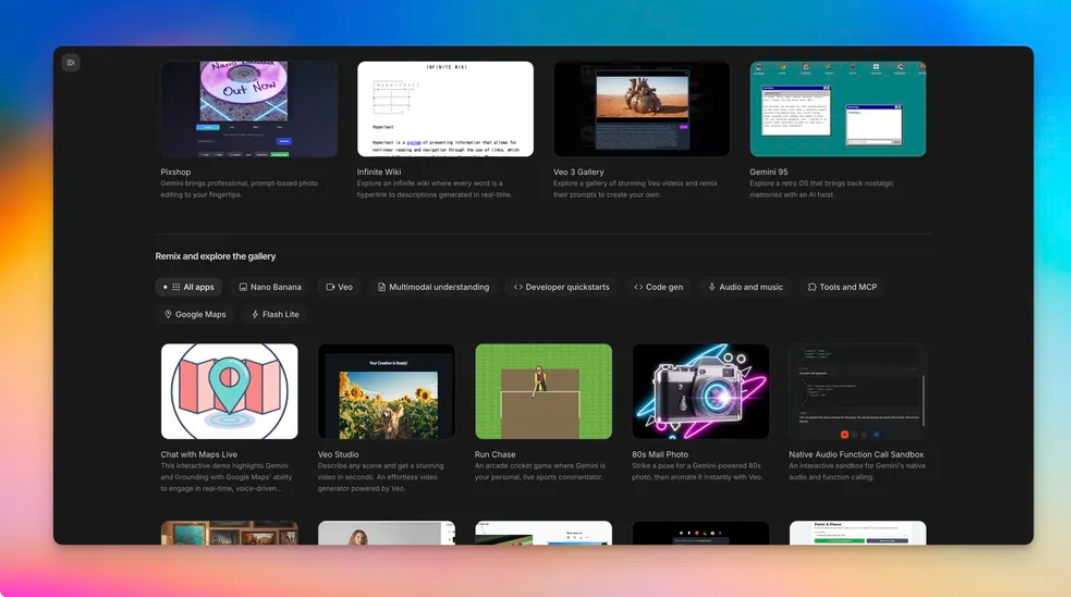
Google Expands AI Studio with Vibe Coding for Subscribers
Google has enhanced its Google AI Studio by rolling out vibe coding features, now available to Google AI Pro and Ultra subscribers. This update allows users to build full-stack applications using natural language prompts, significantly boosting the capabilities of developers with increased usage limits and access to advanced models like Nano Banana Pro and Gemini Pro. The announcement was made via the official Google Blog, and the update is available immediately.
What is Vibe Coding?
Vibe coding is a feature within Google AI Studio's Build mode, where users can describe app ideas in plain language through text, speech-to-text, or randomized prompts. The system then generates full codebases, live previews, and iterative refinements. Key features include:
- Context awareness for maintaining prompt history
- Multi-file management for handling dependencies
- Verified execution to minimize AI hallucinations in code generation
Powered by the Google Antigravity coding agent, the tool supports full-stack runtimes with server-side logic, secure secrets management, npm packages, and integrations like Firebase authentication and Firestore databases. Users can start at ai.studio/build, attach "AI Chips" for features like image generation or Google Maps, and hit "Build" to create a containerized app. Tutorials demonstrate rapid creation of apps like recipe trackers and multiplayer games (Source).
Market Impact and Strategic Context
This update lowers barriers for experimentation, bridging free-tier limits with a subscription-based model that offers predictable costs before scaling to pay-per-request APIs. The timing aligns with intensifying competition in AI developer tools, as OpenAI's GPTs and Anthropic's Projects gain traction amid a booming no-code market projected at $187B by 2030. Google faces pressure post-2025 antitrust scrutiny, using subscriptions to monetize Gemini amid slowing ad revenue growth.
Competitor Comparison
Google's vibe coding positions AI Studio as a direct rival to other no-code/low-code platforms and AI coding agents:
| Platform | Key Strengths | Limitations | Pricing |
|---|---|---|---|
| Google AI Studio | Full-stack (Next.js, Firebase), Gemini integration | Requires Pro/Ultra ($20+/mo) | Free tier + subs |
| Replit Ghostwriter | Collaborative real-time coding | Less natural language focus | Free + $20/mo Pro |
| Cursor AI | IDE-like with deep code understanding | Steeper learning for non-devs | $20/mo |
AI Studio excels in end-to-end deployment and Google ecosystem ties, outpacing Cursor's code-centric approach and v0's UI bias. However, skeptics note potential over-reliance on Gemini, which lags behind OpenAI's GPT-4o in creative tasks per LMSYS benchmarks.
Implications for Developers
This update could accelerate indie developers and startups, enabling "mood board to live site" in under 10 minutes, as demos prove. For enterprises, it offers a low-friction path to production via API handoff. Broader impacts include reduced coding barriers, potentially flooding app stores with AI-generated tools, while raising questions on code quality and IP.
Google positions it as an "easy entry point," but success hinges on model reliability. Early adopters report polished outputs after 2-3 iterations, signaling a shift toward conversational software engineering.
For more details, visit the Google AI Studio documentation.


