
Google Open-Sources DESIGN.md for Cross-Platform AI Consistency
Google open-sources DESIGN.md from Stitch, enabling cross-platform AI design consistency.
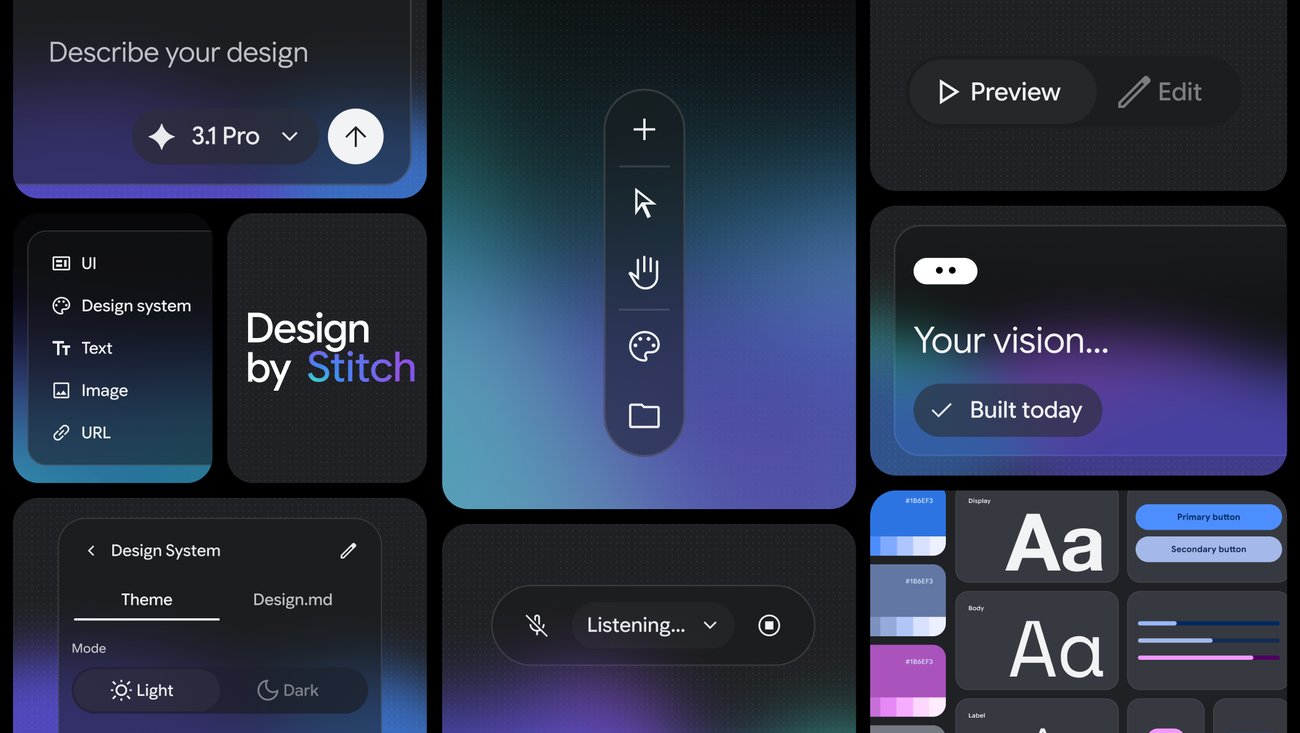
Google Open-Sources DESIGN.md Specification from Stitch
Google has open-sourced the draft specification for DESIGN.md, a structured Markdown format originally developed in its AI-powered UI design tool Stitch. This move enables developers and AI agents to apply consistent design systems across various platforms and tools. Announced via the Google Blog and detailed in a Google Labs video, the specification standardizes how AI interprets design tokens like colors, typography, and spacing, bridging the gap between design generation and code implementation.
What is DESIGN.md and How Does It Work?
DESIGN.md is a plain-text Markdown file that encodes a complete design system in a machine-readable format optimized for AI agents. It combines human-readable explanations with precise values such as hex codes, spacing scales, typography rules, component patterns, and semantic roles for colors. Generated automatically by Stitch, the file serves as a portable "source of truth" that AI coding tools can parse deterministically to produce consistent code output (Source).
Key sections in a typical DESIGN.md include:
- Color system: Primary/secondary colors, semantic assignments, and grayscale values.
- Typography: Font families, sizes, weights, and line heights.
- Spacing and layout: Scales like 4px increments for margins and padding.
- Components: Patterns for buttons, cards, and other UI elements, including accessibility checks against WCAG standards.
Google has released a CLI linter alongside the spec, enabling AI agents to validate designs automatically before code generation. Users can generate a DESIGN.md in Stitch, export it, and import it into tools like Claude Code, Cursor, GitHub Copilot, or Antigravity.
Stitch's Track Record and Evolution
Stitch, launched by Google Labs as an "AI-native UI design tool," generates multi-screen interfaces from natural language, images, or code snippets. Early adopters praise its ability to output not just visuals but executable design metadata, outperforming basic mockup generators. Stitch projects with DESIGN.md have produced more consistent UIs when handed to coding agents compared to prompt-only workflows.
Historically, Stitch has iterated quickly: initial versions focused on internal Google use, with public access expanding via Google Labs. Past performance highlights include seamless multi-platform exports and integration with tools like Antigravity via MCP, where agents fetch "Design DNA" directly from Stitch projects to auto-generate DESIGN.md files with accurate hex codes and rules.
A GitHub repo curating "awesome-design-md" resources already lists implementations, signaling rapid community uptake since the open-sourcing.
Competitor Comparison
| Tool/Format | Key Features | Strengths | Limitations |
|---|---|---|---|
| Google Stitch DESIGN.md | Markdown-based design tokens + CLI linter; AI-optimized for agents; open spec. | Portable across tools; semantic roles over raw vars; WCAG validation. | Draft spec; relies on Stitch for initial gen. |
| Claude Code CLAUDE.md | Project-level persistent instructions for code gen. | Easy embed in repos; strong for Anthropic models. | Less structured for visual tokens; prompt-heavy. |
| Cursor .cursorrules | Context files for IDE-based AI coding. | Integrated with Cursor editor. | Tool-specific; not design-focused. |
| Figma Console MCP | Design token extraction for AI pipelines. | Visual-first; console-based testing. | Less portable; Figma-locked. |
DESIGN.md stands out for its explicit focus on visual design portability, outperforming rivals in controlled tests where it yielded more faithful UI recreations without ad-hoc prompting.
Why Now? Strategic Context and Skeptical Views
The timing aligns with the explosion of agentic AI workflows, where tools like Antigravity and Claude Code demand standardized inputs for reliable output. Google's "why now" emphasizes DESIGN.md's growth beyond Stitch: "It has outgrown any single tool," per Google Labs' David East. Open-sourcing fosters an ecosystem, potentially locking in Google tools as the design-to-code standard while inviting contributions via GitHub.
Critics, however, call it overhyped: YouTube tester Charles Johnson argues it's "not new technology—just markdown with naming conventions," akin to existing context files, with tests showing marginal gains over well-prompted alternatives.
Implications for Developers and Designers
This open spec could streamline AI-driven design-to-code pipelines, reducing errors in color fidelity and spacing—critical for accessible, branded UIs. Tutorials show workflows like: Stitch → DESIGN.md export → Claude Code import → component generation. For teams, it means project portability without vendor lock-in, with CLI tools enabling self-validating agents.
As adoption grows, expect refinements via community feedback, positioning DESIGN.md as a de facto standard in AI UI workflows.


