
Google Integrates Medical Records with Fitbit AI Coach
Google's Fitbit AI Coach now integrates medical records for personalized health insights, marking a step toward AI-driven preventive healthcare.
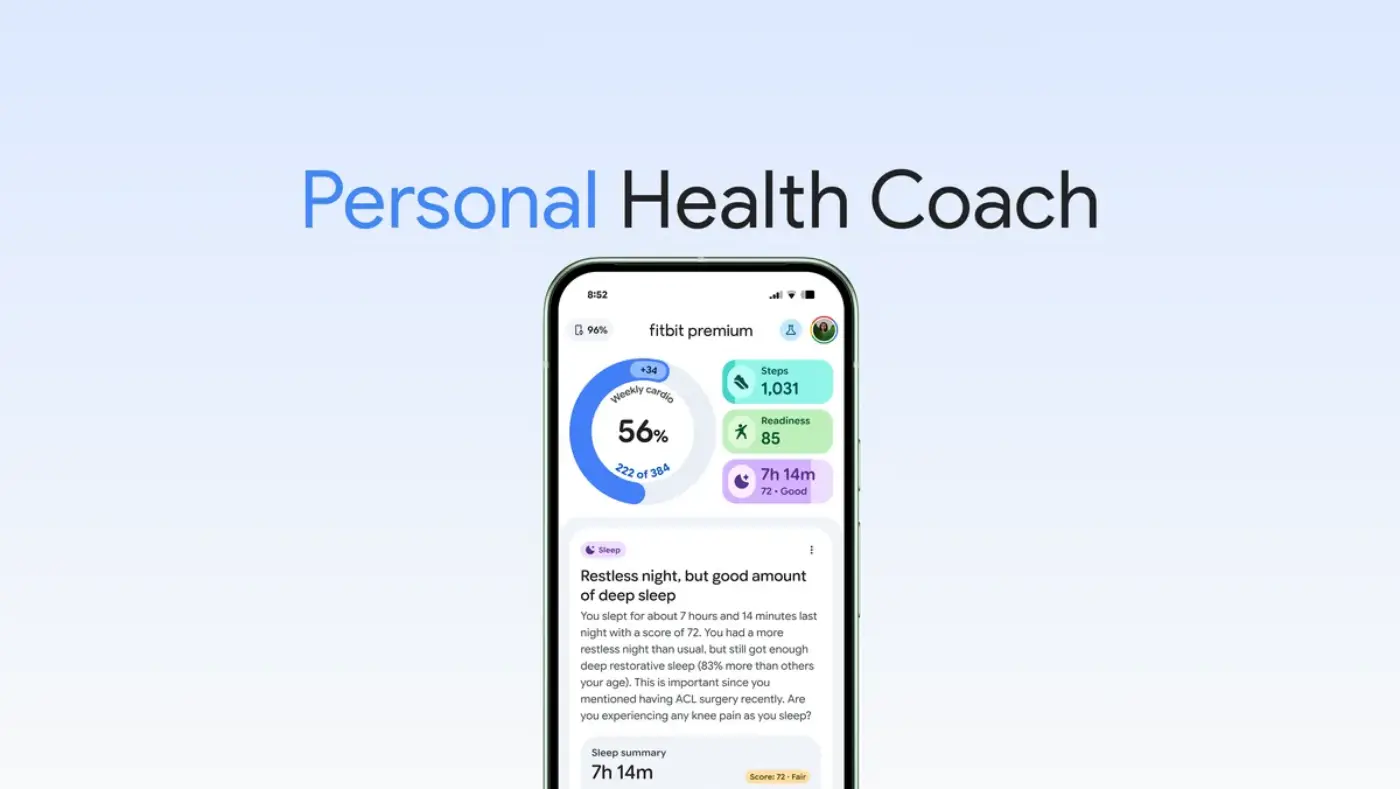
Google's Fitbit AI Coach Integrates Medical Records for Personalized Health Insights
Google has announced significant updates to its Fitbit Personal Health Coach, an AI-powered feature now capable of linking users' medical records directly to the app. This integration combines clinical data such as lab results, medications, and visit history with wearable metrics to provide hyper-personalized wellness guidance. The update was revealed on March 17, 2026, at Google's annual The Check Up health event, and will enter public preview for U.S. users next month. This marks a significant step toward AI-driven preventive healthcare (TechTarget).
Key Features and How It Works
- The update enables Fitbit's AI coach, built on Google's Gemini model, to analyze users' medical histories alongside data from Fitbit wearables, such as sleep scores, heart rate trends, and activity levels.
- Users can connect records by searching for their healthcare provider via partners b. well Connected Health and CLEAR, or by verifying identity with a selfie and ID under IAL2-certified standards for secure, automated syncing across providers.
- Michael Howell, M.D., Google's chief health officer, explained that the coach can now offer tailored advice, such as improving cholesterol based on actual lab trends, making guidance "safer, more relevant, and more personalized" (Google Blog).
- Additional enhancements include continuous glucose monitor (CGM) integration via Health Connect, allowing users to query workout or meal impacts on glucose levels, and a "Get care now" feature for quick provider access.
- Google emphasizes user control: records remain securely in Fitbit, unused for ads, and the tool provides wellness suggestions, not diagnoses or treatments.
Past Performance and Track Record
Fitbit, acquired by Google for $2.1 billion in 2021, has evolved from basic step-counting to AI-enhanced wellness. Its Premium AI coach launched in 2024, initially offering generic sleep and fitness tips, but early user feedback highlighted limitations in personalization without clinical context. Sleep tracking accuracy is set to improve by 15% in this update, building on prior research into metabolic health (Android Central).
Competitor Comparison
| Feature | Fitbit (Google) | Apple Health | Oura Ring | Samsung Health | Whoop |
|---|---|---|---|---|---|
| Medical Record Integration | Yes (labs, meds, visits via b.well/CLEAR) | Limited (EHR sharing via apps) | No | Partial (Samsung ecosystem) | No |
| AI Personalization | Gemini-based coach with clinical data | Siri/Health app insights | AI advisor (sleep/fitness) | Galaxy AI summaries | Strain Coach (recovery) |
| CGM Support | Yes (Health Connect) | Yes (Dexcom) | No | Yes | No |
| Ad Usage | Explicitly none for health data | None stated | None | Ecosystem ads possible | Subscription-only |
Fitbit differentiates with deep medical record access, surpassing Apple and Samsung's wellness focus, while Oura and Whoop emphasize recovery over clinical integration.
Strategic Context and Privacy Concerns
This launch aligns with the CMS Health Tech Ecosystem initiative, where Google, b.well, and CLEAR pledged to enhance interoperability and AI assistants for patient empowerment. Post-pandemic demand for remote health tools has surged, with U.S. interoperability rules mandating data sharing since 2021. Google's timing leverages Gemini's maturity and regulatory tailwinds, positioning Fitbit amid a $50B+ wearables market projected to hit $200B by 2030 (Google Blog).
Critics warn of potential privacy risks, despite Google's encryption and no-ad pledges. Experts urge HIPAA scrutiny, echoing past privacy scandals like the 2019 Fitbit data-sharing controversy.
Broader Implications
This positions Google as a healthcare disruptor, blending consumer wearables with clinical data for proactive insights. Success hinges on trust and adoption; if users embrace it, Fitbit could redefine personalized medicine. The rollout starts U.S.-only, with global expansion likely. For now, it promises a "fuller picture" of health—empowering yet precarious.


