
Google Launches AI Tool for Flash Flood Predictions
Google launches Groundsource AI to predict flash floods in 150 countries using news data, enhancing disaster preparedness.
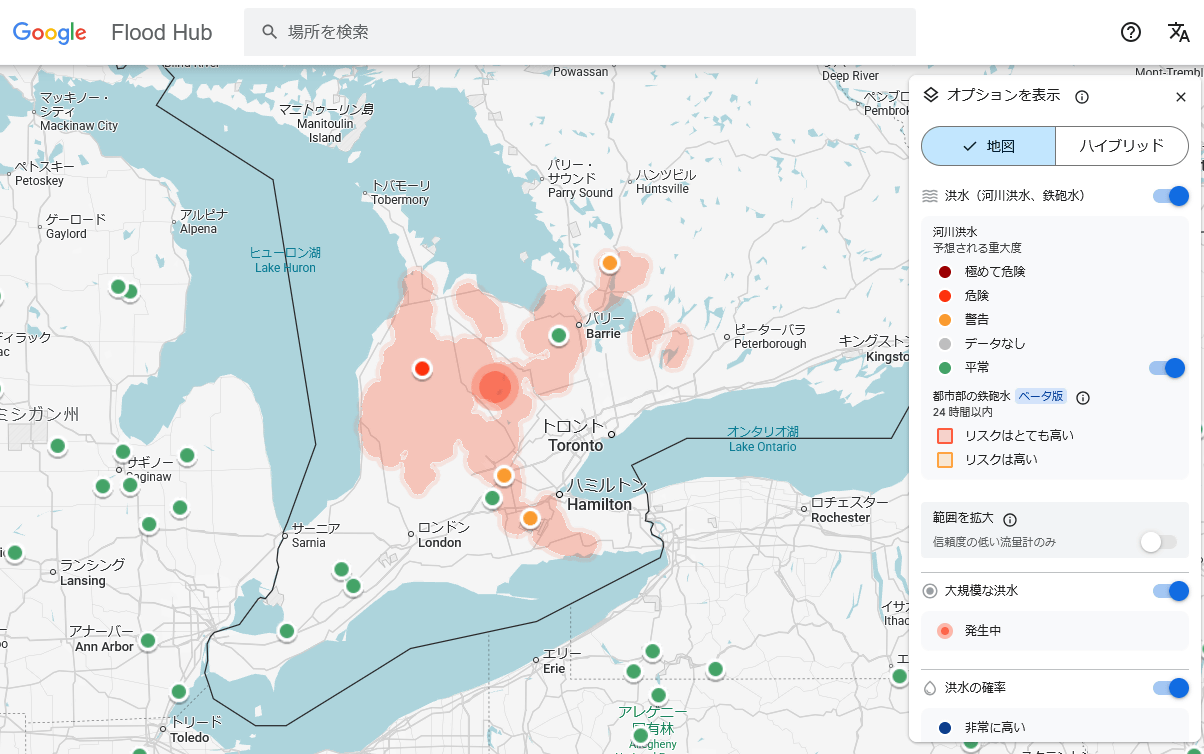
Google Unveils Groundsource: AI Turns Global News Reports into Flash Flood Predictions for 150 Countries
Google Research has launched Groundsource, a groundbreaking AI methodology that analyzes millions of public news reports to create the world's largest dataset of historical flash flood events. This enables 24-hour urban flood forecasts now live on the company's Flood Hub platform across 150 countries (Google Blog). Announced on March 12, 2026, by Yossi Matias, Vice President and Head of Google Research, Groundsource addresses a critical "data desert" in hydro-meteorological disaster tracking by leveraging Google's Gemini large language model (LLM) to process unstructured data into actionable intelligence (TechCrunch).
How Groundsource Works: From News Clippings to Predictive Power
At its core, Groundsource tackles the scarcity of comprehensive flash flood data, which has historically limited AI forecasting models. Flash floods, responsible for over 5,000 deaths annually worldwide, are notoriously hard to predict due to their rapid onset and localized nature (Google Research Blog).
The system scanned 5 million news articles globally, extracting details on 2.6 million flood events across more than 150 countries spanning decades. Gemini powered the extraction of key elements like event timing, location, and severity from unstructured text, while Google Maps provided precise geographic boundaries (Heatmap News). This dataset—publicly available for download—serves as a baseline to train a Long Short-Term Memory (LSTM) neural network model. The model ingests hourly meteorological data to output medium or high flash flood probability for urban areas up to 24 hours in advance (TechCrunch).
Validation metrics are promising: Groundsource captured 85-100% of severe floods recorded by the Global Disaster Alert and Coordination System (GDACS) from 2020-2026, outperforming traditional archives in scale and coverage. In the U.S., its predictions aligned closely with National Weather Service warnings, proving AI's potential to bridge gaps in data-poor regions (Google Research Blog).
Google's Track Record in Disaster AI: Building on Flood Hub Success
This isn't Google's first foray into flood prediction. Since 2020, Flood Hub has delivered riverine flood forecasts up to seven days ahead for 80 countries, alerting 460 million people and preventing an estimated 30% of flood-related displacements through partnerships with organizations like the Southern African Development Community (TechBuzz AI). Groundsource extends this by targeting flash floods, a gap in prior models reliant on satellite and gauge data.
Competitor Landscape: Google Leads in Scale, But Challenges Remain
Google's approach stands out for its use of LLMs on news data, contrasting with competitors like IBM's Watson Weather or Microsoft Azure's flood models, which emphasize satellite imagery and IoT sensors but struggle with historical baselines in the Global South (TechCrunch).
| Feature | Google Groundsource/Flood Hub | IBM Watson Weather | Fathom | One Concern |
|---|---|---|---|---|
| Coverage | 150 countries (urban flash + river) | 100+ countries (general weather) | Global (river/urban) | U.S.-centric, expanding |
| Forecast Horizon | 24 hours (flash), 7 days (river) | 15 days (general) | 48 hours | Event-based |
| Data Source | News + Gemini + Maps | Sensors + satellites | Proprietary maps | Simulations + public data |
| Public Access | Free dataset + Hub | Enterprise API | Paid platform | Enterprise only |
Why Now? Climate Urgency Meets AI Maturity
The timing aligns with escalating flash flood risks amid climate change—2025 saw record urban deluges in Asia and Africa—and Google's post-Gemini AI pivot toward real-world applications. Matias emphasized closing the "data gap" for hazards without sensor infrastructure, positioning Groundsource as extensible to droughts, landslides, and avalanches (TechBuzz AI).
Skeptics note limitations: Coarse city-level resolution ignores street-scale risks, excludes rural areas, and omits severity estimates. Non-peer-reviewed preprints raise questions on long-term validation, and reliance on news could introduce reporting biases in undercovered regions (Heatmap News). Juliet Rothenberg, Google Resilience program manager, acknowledged these as "early days," with refinements underway (TechCrunch).
Broader Implications: Reshaping Global Resilience
Groundsource exemplifies how LLMs can unlock "unstructured memory" like news for science, democratizing disaster prep. By sharing data openly, Google fosters ecosystem growth, potentially saving lives in vulnerable cities. As expansions target rural zones and new hazards, it signals AI's pivot from hype to humanitarian impact—provided biases and granularities evolve (Google Research Blog).


