
Google's Gemini 3.1 Flash Live Brings Real-Time Voice AI to the Mainstream
Google's new Gemini 3.1 Flash Live voice model delivers sub-second latency and real-time audio processing at a fraction of competitor costs, reshaping how developers build conversational AI applications.
The Real-Time AI Arms Race Heats Up
The race for sub-second voice AI just got fiercer. Google has introduced Gemini 3.1 Flash Live, a voice-first model engineered for real-time audio interaction with latency measured in milliseconds rather than seconds. This move directly challenges competitors like OpenAI and Anthropic, who have been positioning themselves as leaders in conversational AI—but at significantly higher price points.
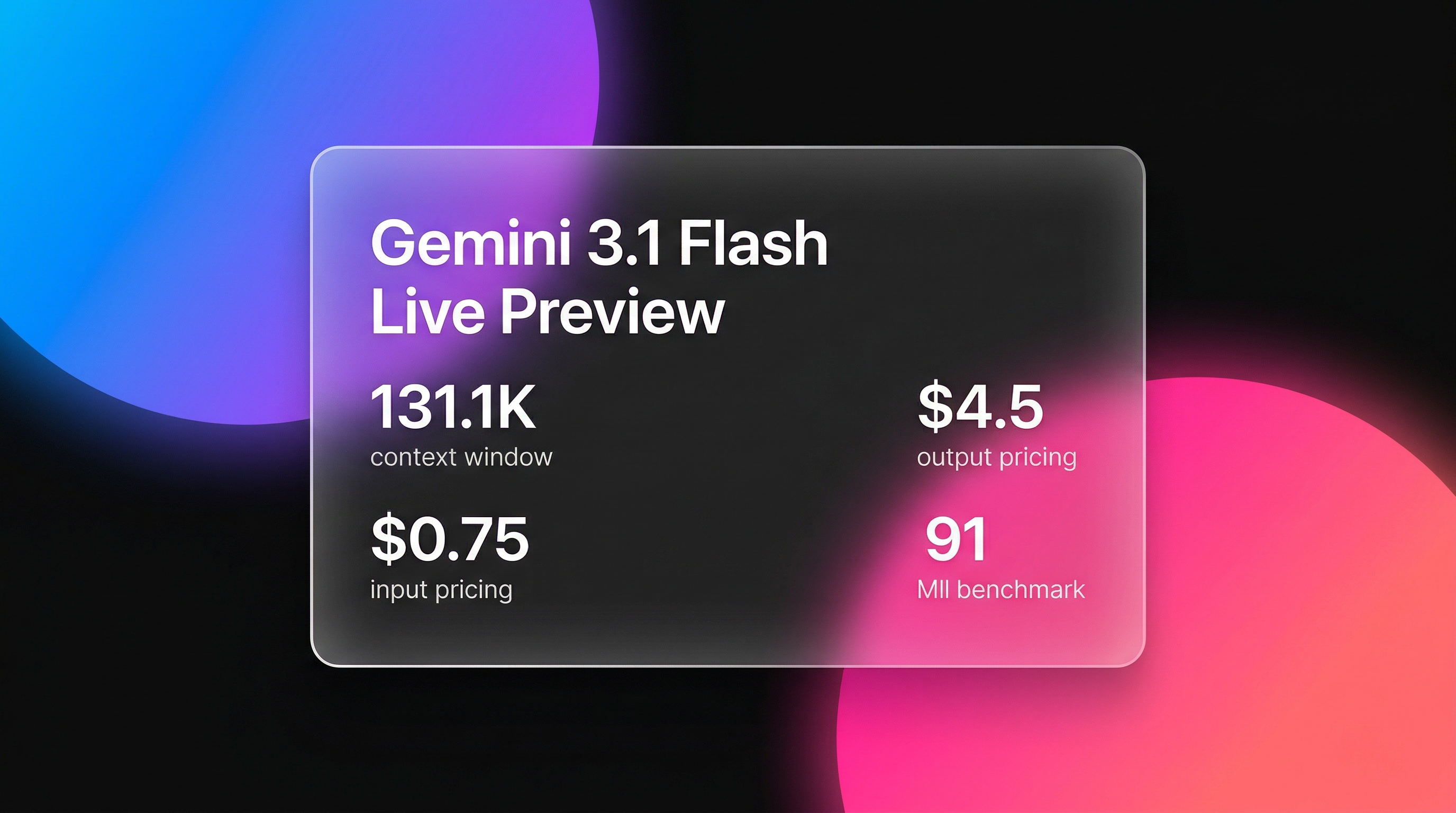
What makes this release noteworthy isn't just the technology; it's the economics. According to 9to5Google, the model is priced at $0.75 per million input tokens, making it one of the most cost-effective options for developers building voice-enabled applications. For enterprises and startups alike, this pricing structure could reshape project budgets and feasibility calculations.
Technical Capabilities and Performance
Gemini 3.1 Flash Live is built to handle continuous audio streams with minimal delay. The model processes voice input and generates responses in real time, enabling natural back-and-forth conversations without the awkward pauses that plague many current voice assistants.
Key technical features include:
- Sub-second latency: Audio processing happens fast enough for natural conversation flow
- Streaming audio support: Handles continuous input without requiring full utterance completion
- Multi-turn context: Maintains conversation history for coherent, contextual responses
- Cost efficiency: Significantly undercuts enterprise pricing from competitors
According to Search Engine Journal, Google is positioning this model as a foundation for next-generation search experiences, where users can ask questions conversationally and receive real-time answers without traditional search result formatting.
Real-World Applications and Developer Impact
The implications extend beyond chatbots. Android Central notes that Gemini 3.1 Flash Live represents a massive boon for real-time AI assistance, enabling developers to build:
- Voice-first customer service agents that respond naturally without scripted delays
- Real-time translation and interpretation for global communication
- Accessibility tools for users who prefer voice interaction
- Mobile applications with responsive voice interfaces
According to Jetstream, the model's architecture is optimized for edge deployment, meaning some processing can happen on-device rather than requiring constant cloud connectivity. This reduces latency further and addresses privacy concerns for sensitive applications.
Market Context and Competitive Positioning
Google's timing is strategic. As enterprises increasingly demand voice-enabled AI, the company is leveraging its infrastructure advantages to offer both performance and affordability. The combination of low latency and aggressive pricing creates a compelling value proposition for developers who might otherwise default to established competitors.
However, questions remain about real-world performance at scale. Latency measurements in controlled environments don't always translate to production deployments with millions of concurrent users. The true test will come as developers integrate Gemini 3.1 Flash Live into commercial applications and report on actual performance metrics.
What's Next
Google's move signals that voice AI is transitioning from experimental feature to commodity infrastructure. As pricing pressure increases across the industry, expect competitors to respond with their own pricing adjustments and performance improvements. For developers, the immediate opportunity is clear: building voice applications just became significantly more affordable and technically feasible.


