
Meta Plans Major Layoffs Amid Rising AI Costs
Meta plans significant layoffs due to rising AI costs, impacting thousands of employees. The move reflects industry-wide pressures to balance AI investments.
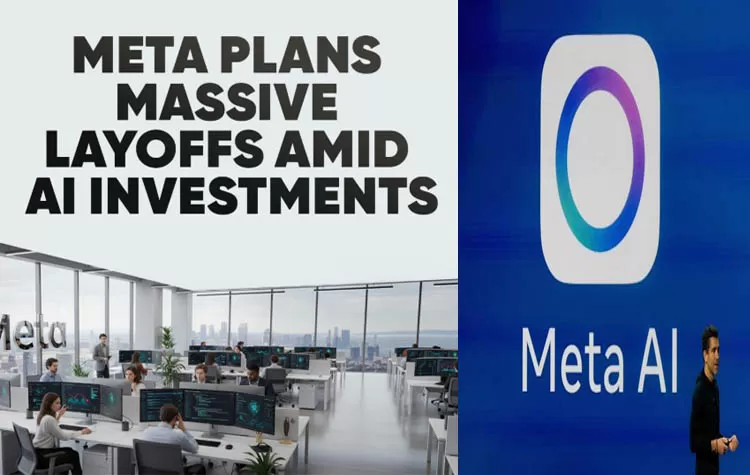
Meta Plans Major Layoffs Amid Rising AI Costs
San Francisco, March 15, 2026 – Meta Platforms is set to implement significant layoffs across various divisions due to increasing costs associated with its ambitious artificial intelligence (AI) projects, as reported by Reuters. This decision highlights the growing pressure on the social media giant to optimize operations while investing heavily in AI infrastructure, including data centers and custom silicon, despite uncertain returns.
Details of the Planned Layoffs
According to internal sources cited by Reuters, Meta's leadership is considering cuts in non-core teams, such as engineering, marketing, and support functions. The layoffs, expected to commence next quarter, could impact up to 10% of Meta's approximately 70,000 employees—around 7,000 jobs. This follows previous reductions, where Meta cut 21,000 positions between 2022 and 2023 during a post-pandemic advertising slowdown. However, the company has since experienced strong revenue growth driven by AI-enhanced ad targeting.
Meta's AI capital expenditures (CapEx) have surged, with projections for 2026 reaching $60-65 billion, up from $38-40 billion in 2025. These funds are primarily allocated for AI servers and GPUs. CEO Mark Zuckerberg has emphasized the goal of building "the world's best AI infrastructure," including the development of Llama AI models and supercomputing clusters. Despite a 22% revenue growth to $42.3 billion in the last quarter, these investments have strained margins, with operating expenses rising 15% year-over-year.
Past Performance and Layoff Track Record
Meta's history of workforce reductions reflects a cyclical approach to cost management. In November 2022, the company announced 11,000 layoffs (13% of staff) following a hiring surge in 2021. A second round in March 2023 saw another 10,000 jobs cut, focusing on "low-priority" projects like experimental metaverse initiatives. These actions contributed to record profitability, with net income increasing 16% to $15.7 billion in Q4 2025.
However, the current layoffs are driven by offensive investments in AI. Meta's Reality Labs division, responsible for AI and VR/AR, reported a $16.1 billion loss in 2025, while the core Family of Apps (Facebook, Instagram) remains profitable.
Competitor Comparison: AI Spending Arms Race
Meta's situation is not unique in the industry. Google (Alphabet) is facing similar challenges, with 2026 CapEx projected at $75 billion for AI data centers. Alphabet has also undergone layoffs and team restructures. Microsoft, benefiting from its partnership with OpenAI, plans $80 billion in AI infrastructure spending but has avoided major layoffs. Amazon's AWS leads in cloud AI revenue, cushioning its over $100 billion CapEx without broad cuts.
| Company | 2026 Projected AI CapEx | Recent Layoffs | Q4 2025 Revenue Growth |
|---|---|---|---|
| Meta | $60-65B | Planning 7K+ | +22% |
| $75B | 12K (2023) | +15% | |
| Microsoft | $80B | Minimal | +18% |
| Amazon | $100B+ | Targeted | +14% |
Why Now? Strategic Context and Market Timing
The timing of these layoffs coincides with macroeconomic pressures and strategic shifts. Interest rates, though reduced to 3.5% by early 2026, still impact borrowing costs for CapEx-heavy companies. Additionally, the AI hype is meeting reality, with commoditized models eroding competitive advantages. Zuckerberg's "year of efficiency" in 2023 has evolved into "AI efficiency" in 2026, prioritizing engineers over "middle managers."
Investor sentiment is mixed, with Meta's stock dipping 3% post-report but trading at 25x forward earnings, above its five-year average. Analysts express concerns about the "AI cost overhang" potentially delaying profitability until 2028.
Implications for Tech and AI Landscape
These layoffs could accelerate Meta's AI focus, potentially leading to breakthroughs in areas like advanced AR glasses or improved ad algorithms. However, the risk of losing talent could hinder innovation. The broader industry may see similar cuts at companies like Snapchat and TikTok, intensifying the AI talent war. For employees, this serves as a reminder of the tech industry's volatility; for investors, it's a gamble on Meta's strategic execution.
This development underscores the high-stakes nature of Big Tech's AI investments: massive upfront costs for uncertain dominance. As Meta trims its workforce, the question remains—will efficiency lead to supremacy, or reveal overreach?


