
OpenAI Adopts Outcome-Based Pricing for AI Discoveries
OpenAI shifts to outcome-based pricing, sharing in customer success across sectors like pharmaceuticals and finance.
OpenAI Adopts Outcome-Based Pricing for AI Discoveries
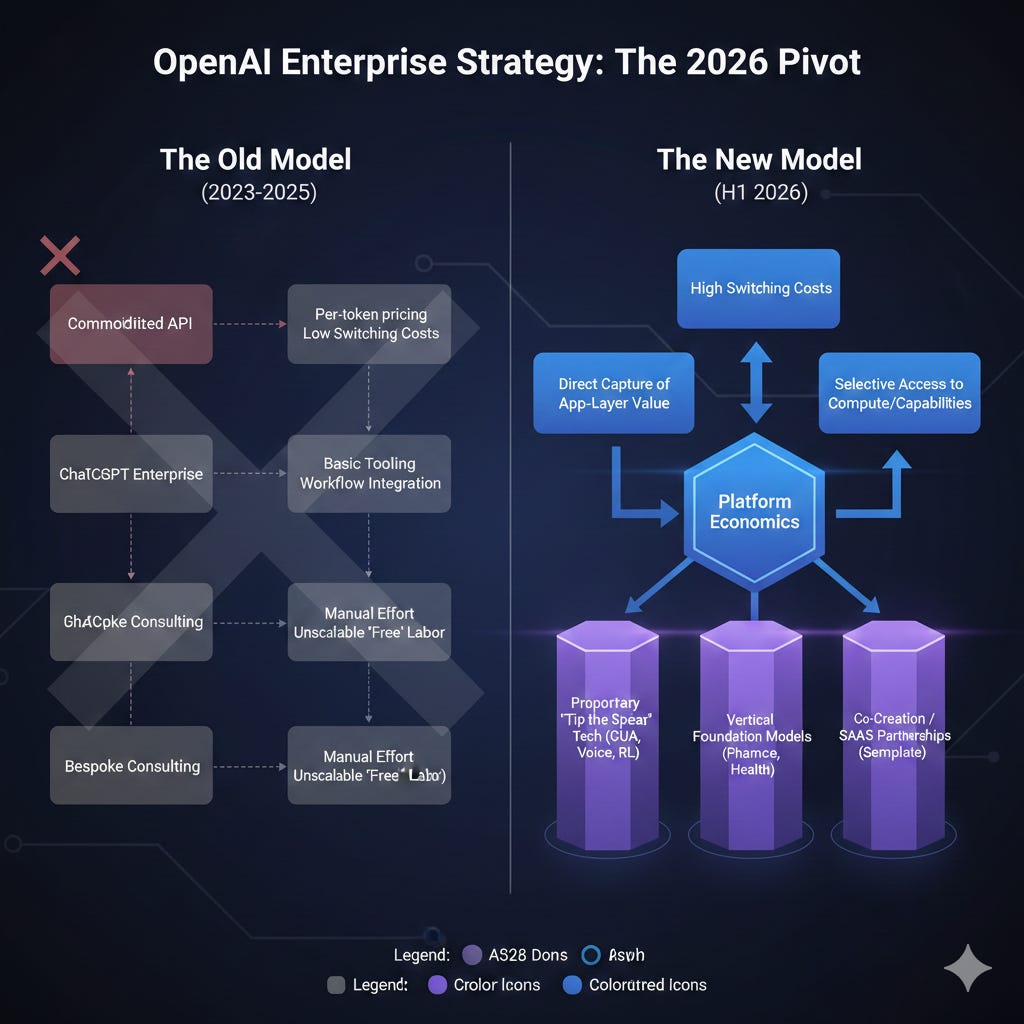
OpenAI is transitioning its revenue model to include outcome-based pricing agreements. This shift allows OpenAI to share in the financial success of its customers' AI-driven breakthroughs across sectors such as pharmaceutical development, scientific research, energy systems, and financial modeling (The Information).
Strategic Shift Explained
Sarah Friar, OpenAI's Chief Financial Officer, explained that the company plans to license its technology, receiving a percentage of sales when customers achieve commercial success. "Let's say in drug discovery, if we licensed our technology, you have a breakthrough. The drug takes off, and we get a licensed portion of all its sales," Friar noted on "The OpenAI Podcast" (Source).
This marks a departure from OpenAI's traditional revenue streams, which include consumer subscriptions, enterprise licensing, and usage-based API pricing.
Rationale for the New Model
OpenAI's pivot reflects its growing infrastructure commitments and the limitations of existing revenue streams. Despite operating with $20 billion in annual recurring revenue, OpenAI faces $1.4 trillion in spending commitments for computing power and data center infrastructure (The Information).
The company's API business has added more than $1 billion in annual recurring revenue in a single month, highlighting the willingness of enterprises to pay when AI models contribute to business outcomes. However, traditional pricing structures misalign incentives, as OpenAI bears infrastructure costs regardless of customer success.
Multi-Tiered Business Model
OpenAI's strategy for 2026 includes:
- Consumer and team subscriptions
- Free ad- and commerce-supported tiers
- Usage-based API pricing
- Advertising integration in ChatGPT's lower-paying tiers
- Licensing and IP-based agreements
- Outcome-based pricing for high-value applications
Friar stated, "The business model closes the loop... Licensing, IP-based agreements, and outcome-based pricing will share in the value created" (Source).
Competitive Context
OpenAI's move positions it ahead of competitors in capturing value from AI-enabled breakthroughs. While other AI labs have explored similar models, few have committed to systematic outcome-based pricing for discovery-oriented applications.
This model also addresses challenges in AI commercialization by tying OpenAI's success to measurable customer results, particularly in regulated industries like pharmaceuticals or finance.
Focus on Practical Adoption
OpenAI's priority for 2026 is not advancing model capabilities but closing the gap between AI possibilities and actual use. This reflects a strategic focus on deployment, integration, and monetization rather than capability improvements.
Infrastructure as a Competitive Advantage
OpenAI's infrastructure spending is seen as foundational. "Revenue goes along with computing power. The more compute OpenAI has the faster it will grow," Friar emphasized (Source).
By controlling powerful AI infrastructure, OpenAI aims to negotiate favorable terms with customers whose success depends on access to its capabilities.
The shift to outcome-based pricing aligns OpenAI's financial incentives with the value its technology creates, potentially setting a new standard for AI commercialization.


