
OpenAI Partners with Pentagon for AI Deployment Amid Anthropic Rift
OpenAI partners with the Pentagon for AI deployment, emphasizing ethical safeguards amid Anthropic fallout.
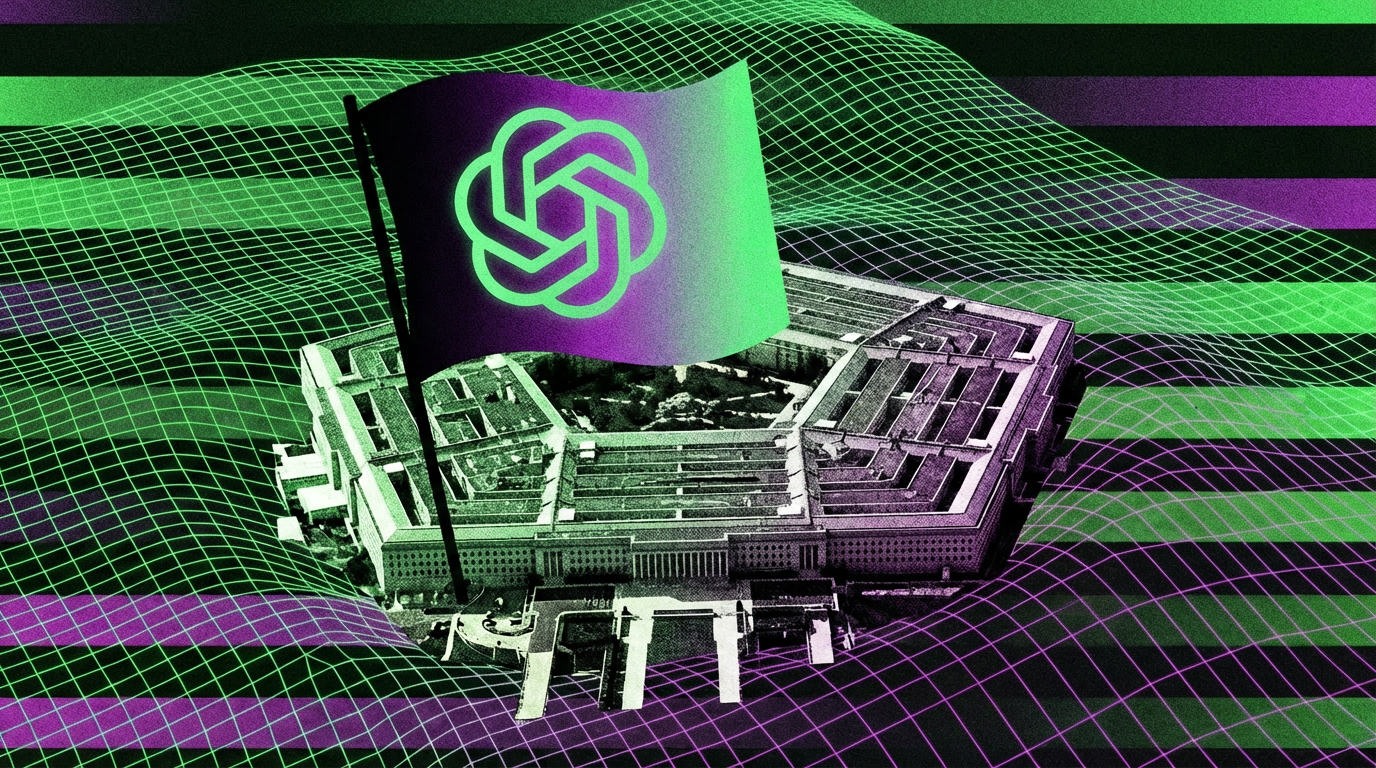
OpenAI Strikes AI Deal with Pentagon Amid Anthropic Fallout, Emphasizing Ethical Safeguards
OpenAI announced a landmark agreement on February 28, 2026, to deploy its advanced AI models within the U.S. Department of Defense (DoD)'s classified networks, just hours after the Trump administration severed ties with rival Anthropic over irreconcilable ethical differences. The deal, hailed by OpenAI CEO Sam Altman as a model for safe AI-military collaboration, includes strict prohibitions on domestic mass surveillance and fully autonomous weapons, setting it apart from prior arrangements (Politico).
The agreement comes at a pivotal moment in U.S. national security strategy, where AI integration is seen as essential to counter adversaries like China and Russia, who are rapidly advancing their own AI capabilities in military applications. OpenAI's move fills a void left by Anthropic's collapse in negotiations, positioning the ChatGPT maker as a key Pentagon partner while sparking debates over the balance between innovation, ethics, and defense needs (TechCrunch).
Deal Details and Safeguards
OpenAI's contract outlines a "multi-layered" safety approach that exceeds previous classified AI deployments. Key provisions include:
- Cloud-based deployment only: Models operate via API in cleared cloud environments, preventing direct integration into weapons systems, sensors, or edge hardware that could enable autonomous operations.
- Prohibitions on red-line uses: Explicit bans on mass domestic surveillance—deemed illegal by DoD policy—and fully autonomous weapons, with human oversight mandated for any force decisions.
- OpenAI personnel in the loop: Cleared engineers and safety researchers will provide forward-deployed support, retaining full discretion over the "safety stack." Contractual protections reinforce U.S. laws.
Altman announced the deal on X (formerly Twitter), praising the Pentagon's "deep respect for safety" and noting that OpenAI requested identical terms be extended to all AI firms, including efforts to reconcile with Anthropic. In a company blog post, OpenAI contrasted its approach with competitors who have "reduced or removed safety guardrails" in favor of mere usage policies.
Katrina Mulligan, OpenAI's head of national security partnerships, emphasized on LinkedIn that "deployment architecture matters more than contract language," arguing the cloud model inherently blocks risky integrations.
Past Performance and Track Record
OpenAI's entry into defense builds on its evolution from a nonprofit focused on safe AGI to a for-profit powerhouse. Initially, the company shunned military contracts, banning their use for weapons in 2023 amid internal debates. By 2024, it pivoted, securing a $100 million DoD deal for administrative AI tools like cybersecurity and data analysis—demonstrating reliable performance in non-lethal applications without safeguard breaches (OpenAI Blog).
Competitor Comparison: OpenAI vs. Anthropic
| Aspect | OpenAI Deal | Anthropic Stance/Outcome |
|---|---|---|
| Ethical Red Lines | Contractual bans + cloud architecture; human oversight enforced | Drew firm lines on surveillance/weapons; refused deployment without guarantees |
| Deployment Model | Cloud API only; OpenAI staff involved | Demanded similar but negotiations failed; designated "supply-chain risk" by DoD |
| Outcome | Approved for classified use; terms offered to others | Banned by Trump directive; 6-month federal transition period |
| Safeguards Depth | "More expansive" per OpenAI; multi-layered (tech + legal) | Policy-based; criticized as insufficient by DoD under Trump |
Anthropic's clash stemmed from insisting on unbreakable technical barriers, leading President Trump to order federal agencies to halt its AI use and Secretary of Defense Pete Hegseth to label it a risk. OpenAI, conversely, negotiated flexibility while claiming superior protections.
Why Now? Strategic Context and Skepticism
The timing aligns with escalating geopolitical tensions: U.S. intelligence reports highlight China's AI-military fusion, prompting DoD urgency for domestic alternatives. OpenAI cited "growing threats from potential adversaries" as a key driver, having delayed classified deals until safeguards matured. Trump's February 28 directive against Anthropic created an immediate gap, which OpenAI filled "definitely rushed," per Altman's admission—raising optics concerns amid perceptions of opportunism.
Critics question durability: TechCrunch noted Altman's acknowledgment of poor optics, while some experts worry cloud reliance could evolve under pressure. OpenAI counters that U.S. law and architecture provide robust checks, positioning the deal as a de-escalation step for AI-government ties.
Broader Implications
This pact could reshape AI-defense dynamics, encouraging other labs like xAI or Meta to engage under similar terms. It underscores a U.S. push for "responsible" AI supremacy, but risks normalizing military AI amid ethical debates. As Altman stated, collaboration is essential for "a good future"—yet Anthropic's exclusion signals potential fractures.
Image Note: Searches for "OpenAI Reaches A.I. Agreement With Defense Dept." yielded a primary illustration from Politico: a split graphic showing Sam Altman's X post alongside Pentagon insignia and AI neural network visuals (non-stock, event-specific). OpenAI's blog features a custom infographic detailing safeguard layers.


