
OpenAI's Codex App Hits 200K Downloads on Day One, Signaling Shift in Developer Tools
OpenAI's newly launched Codex Mac application reached 200,000 downloads on its first day, reflecting growing developer demand for AI-powered coding assistants integrated directly into the desktop environment.
The Race for Developer Mindshare Intensifies
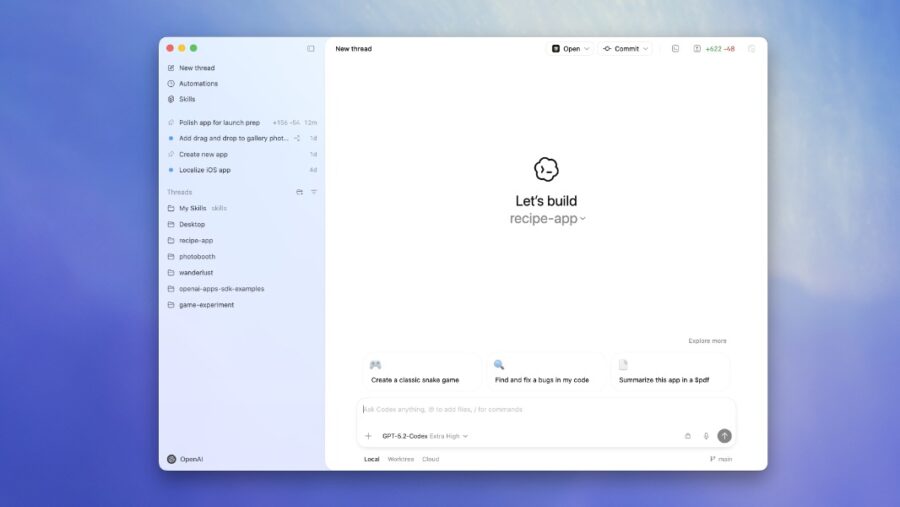
OpenAI's Codex Mac application has already captured significant traction with 200,000 downloads on its launch day—a metric that underscores the intensifying competition for developer tools in an AI-saturated market. While GitHub Copilot and other IDE-integrated solutions dominate the coding assistant space, OpenAI's decision to release a standalone macOS application signals a strategic pivot toward capturing developers who work outside traditional integrated development environments.
The rapid adoption suggests that developers are actively seeking alternatives to existing workflows, or that OpenAI's positioning of Codex as a "command centre" for agentic coding resonates with a specific segment of the developer community. However, the real question isn't whether the app can achieve impressive download numbers—it's whether those downloads translate into sustained engagement and paid subscriptions.
What Codex Brings to macOS
The Codex Mac application represents OpenAI's attempt to democratize AI-assisted development beyond the confines of VS Code and JetBrains IDEs. Key features include:
- Native macOS Integration: Direct access to system resources and workflows without relying on browser-based or plugin-dependent solutions
- Agentic Coding Capabilities: The ability to delegate multi-step coding tasks to AI agents, reducing manual intervention
- Command Centre Architecture: A centralized interface for managing coding tasks, project context, and AI interactions
This positioning differs from GitHub Copilot's approach, which embeds AI assistance within existing development environments. By offering a standalone application, OpenAI creates a new category of developer tool—one that sits between your IDE and your browser, potentially serving as a coordination layer for complex development workflows.
Market Context and Competitive Pressure
The 200,000 download figure arrives amid broader consolidation in the AI developer tools space. GitHub Copilot has already captured significant market share among enterprise developers, while newer entrants like Cursor and Windsurf have gained traction by offering IDE-like experiences with AI at the core rather than at the periphery.
OpenAI's move suggests the company recognizes that a single integration point (the IDE) may not be sufficient to capture the full developer workflow. By launching a dedicated macOS application, OpenAI can:
- Reach developers who use multiple IDEs or text editors
- Provide context-aware assistance across projects and repositories
- Build a direct relationship with users, reducing dependency on IDE vendors
- Gather usage data to refine its AI models specifically for coding tasks
The Download Metric: Promise and Caution
While 200,000 downloads in a single day is impressive, it's worth contextualizing this figure. Download counts often reflect initial curiosity rather than sustained adoption. The critical metrics to watch are:
- Daily Active Users (DAU): How many of those 200,000 users return after the first week?
- Retention Rate: What percentage remain active after 30 days?
- Conversion to Paid: How many free users upgrade to premium tiers?
- Feature Adoption: Which capabilities drive the most engagement?
OpenAI has not disclosed these deeper engagement metrics, which would provide a more accurate picture of the application's true market fit.
What's Next
The launch of Codex for macOS represents a broader strategy by OpenAI to embed its AI models into developer workflows at multiple touchpoints. Whether this standalone application becomes a core part of developers' daily routines—or remains a novelty that fades after initial experimentation—will depend on its ability to solve real problems faster and more intuitively than existing alternatives.
The 200,000 download figure is a strong opening statement. The real test begins now.


