
OpenAI's Codex Desktop App Escalates the AI-Assisted Coding Wars
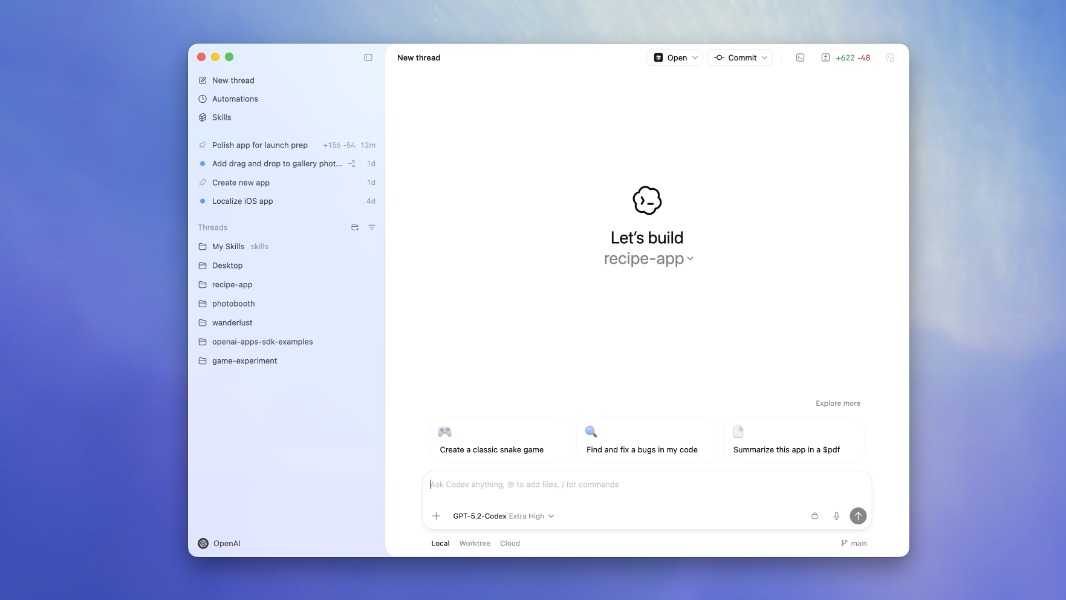
OpenAI launches a native Codex desktop application with parallel multi-agent capabilities, challenging GitHub Copilot's dominance in AI-powered development tools.
The Competitive Pressure Mounts in AI Coding
The race for developer mindshare just intensified. OpenAI has released a native desktop application for Codex, its AI code generation engine, bringing parallel multi-agent capabilities directly to developers' machines. This move signals a strategic pivot from browser-based interfaces to standalone tooling—a critical battleground where GitHub Copilot has held considerable sway.
The timing matters. As enterprises increasingly adopt AI-assisted development, the friction of switching between IDEs and web interfaces becomes a competitive disadvantage. OpenAI's desktop app removes that friction, positioning Codex as a first-class citizen in the developer workflow rather than a supplementary service.
What the Desktop App Delivers
The new Codex application introduces several technical capabilities designed to accelerate development cycles:
- Parallel Agent Execution: Multiple AI agents can operate simultaneously on different coding tasks, reducing sequential bottlenecks
- Native Integration: Direct access from the desktop eliminates context-switching overhead between browser tabs and development environments
- macOS Priority: Initial release targets macOS users, reflecting the platform's dominance in professional development communities
- Real-time Collaboration: Agents can coordinate on complex refactoring and feature implementation tasks
The parallel agent architecture represents a meaningful departure from single-threaded code generation. Rather than waiting for one AI model to complete a suggestion, developers can spawn multiple agents to explore different solutions concurrently—a capability that could substantially reduce time-to-implementation for complex features.
Technical Architecture and Performance Implications
The desktop-first approach carries implications for latency and reliability. By running locally or with optimized cloud connectivity, the app can reduce round-trip times compared to web-based alternatives. This matters in development workflows where milliseconds of delay compound across hundreds of interactions per day.
The multi-agent design also addresses a known limitation of single-model code generation: hallucination and suboptimal solutions. With parallel agents, developers gain multiple candidate implementations to evaluate, effectively crowdsourcing better outcomes from the same underlying model.
Market Positioning and Competitive Dynamics
GitHub Copilot remains the market leader in AI coding assistants, with deep IDE integration through extensions and enterprise adoption through GitHub's existing relationships. However, Copilot's reliance on VS Code and JetBrains ecosystems creates lock-in that OpenAI can now circumvent with a standalone application.
The desktop app also signals OpenAI's confidence in Codex's capabilities beyond simple autocomplete. By investing in native applications, the company is betting that developers will choose Codex-powered workflows even when alternatives are available through their existing tooling.
Implications for Developers and Teams
For individual developers, the parallel agent capability could meaningfully improve productivity on routine tasks—boilerplate generation, test writing, and refactoring. For teams, the desktop app enables standardized tooling across different IDE preferences, potentially simplifying onboarding and knowledge sharing.
However, questions remain about cost structure, API rate limits, and how the parallel agent feature will be priced. These details will determine whether the app becomes a standard part of the developer toolkit or remains a specialized tool for specific use cases.
What's Next
The release of a native desktop application represents a maturation of OpenAI's developer strategy. Rather than relying solely on API access and browser interfaces, the company is now competing directly in the IDE and tooling space—a market where execution, reliability, and developer experience determine winners.
The competitive response from GitHub, JetBrains, and other tooling vendors will likely follow quickly. The AI coding assistant market is far from settled, and this move raises the stakes for everyone competing for developer attention.


