
Oura Patents AR Smart Glasses Controlled by Ring Gestures
Oura has filed a patent for augmented reality glasses that respond to hand gestures made with its smart ring, positioning the wearable company to compete in the emerging AR eyewear market dominated by Meta and Apple.
The AR Glasses Patent Race Heats Up
The battle for AR eyewear supremacy just got more crowded. Oura, the Finnish health-tracking company known for its biometric rings, has filed a patent for augmented reality glasses that can be controlled using gestures made with its smart ring, according to recent filings. This move signals that wearable makers are increasingly looking beyond smartphones to capture the next computing interface—and Oura is betting its existing ring ecosystem gives it a competitive edge.
The patent filing represents a significant strategic pivot for Oura, which has built its reputation on health monitoring through finger-worn devices. Rather than developing a standalone AR solution, the company appears intent on leveraging its core product as a control mechanism, creating an integrated hardware ecosystem that competitors like Meta and Apple have yet to fully realize.
How the System Works
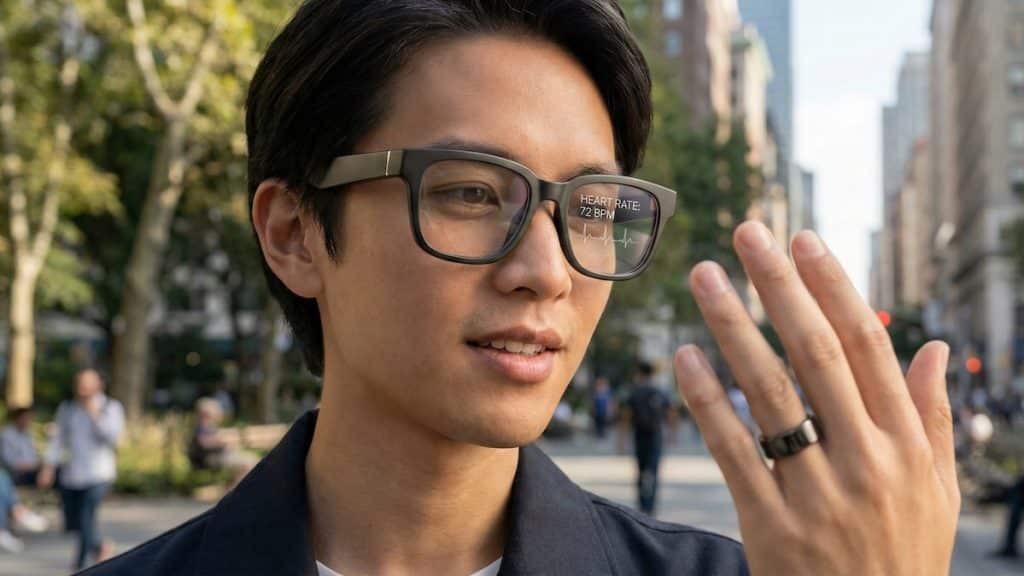
The patented design envisions AR glasses that display health metrics, notifications, and contextual information directly in the user's field of view. The smart ring serves as the primary input device, with gesture recognition enabling hands-free control of the glasses. This approach offers several technical advantages:
- Gesture-based interface: Users can navigate menus and interact with content through finger movements, eliminating the need for voice commands or touch surfaces
- Biometric integration: The ring's existing health sensors could feed real-time data directly to the AR display
- Reduced cognitive load: Wearers maintain visual focus on the AR content rather than fumbling with separate controllers
According to patent documents reviewed by tech analysts, the glasses would visualize health data in real-time, potentially showing metrics like heart rate variability, sleep quality, and activity levels overlaid on the user's environment.
Market Context and Competition
The AR glasses market remains fragmented and largely experimental. While Meta has invested billions in its Reality Labs division and Apple released the Vision Pro, neither company has achieved mainstream adoption. The smart glasses market is expected to see significant innovation in 2026, with multiple players vying for market share.
Oura's approach differs fundamentally from competitors. Rather than building a closed ecosystem, the company could position itself as a health-focused alternative to general-purpose AR platforms. This specialization mirrors successful strategies in wearables—where focused functionality often outperforms generalist devices.
However, challenges remain. The smart ring market itself is becoming increasingly competitive, with gesture controls and haptic feedback emerging as key differentiators. Oura must not only perfect its AR glasses but also ensure seamless integration with its existing ring hardware.
Patent vs. Product Reality
It's important to note that patents represent technological exploration, not guaranteed products. Many companies file patents for concepts that never reach consumers. Oura has not announced a commercial timeline for AR glasses, and the company's current focus remains on its core ring business.
Oura's leadership has emphasized the company's commitment to wearable technology in healthcare, suggesting that any AR glasses would likely emphasize health monitoring over entertainment or general computing.
What This Means for the Industry
Oura's patent filing reflects a broader trend: wearable makers are exploring how multiple devices can work together to create more intuitive interfaces. If successful, ring-controlled AR glasses could establish a new product category that emphasizes health data visualization and biometric feedback.
The filing also underscores the competitive pressure facing smaller wearable companies to innovate beyond incremental hardware improvements. As the AR market matures, differentiation through specialized use cases—like health monitoring—may prove more viable than competing directly with tech giants on general-purpose computing.


