
Tesla's Optimus Robot Enters Mass Production Phase
Tesla accelerates its humanoid robotics ambitions as Optimus moves toward commercial deployment, signaling a major shift in the robotics industry landscape.
The Humanoid Race Heats Up
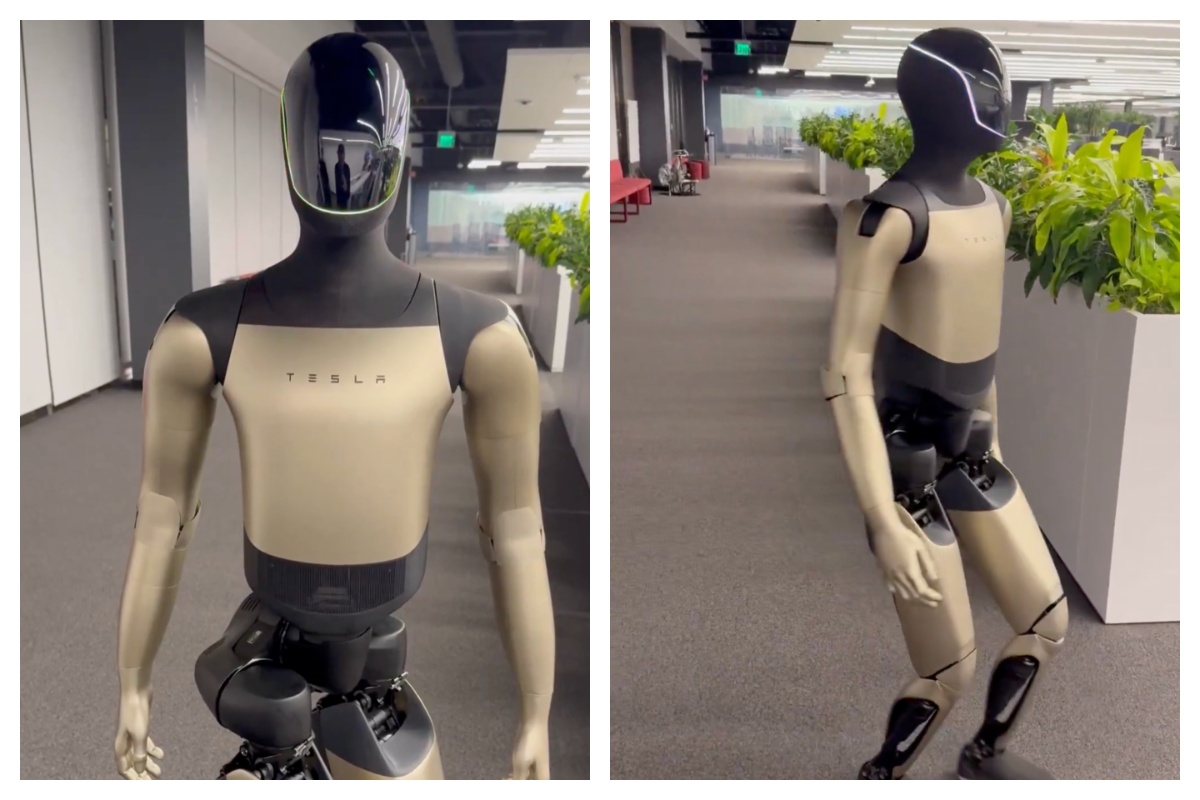
The robotics industry just witnessed a significant acceleration. Tesla's Optimus humanoid robot is transitioning from prototype demonstrations to mass production readiness, marking a critical inflection point in the company's broader push to compete with established robotics players and emerging startups alike. This move underscores a fundamental shift: humanoid robots are no longer confined to research labs—they're entering the commercial pipeline.
What's Changed in Optimus Development
Tesla has made substantial engineering progress on its humanoid platform. According to recent demonstrations, the latest iterations show marked improvements in dexterity, speed, and task versatility. The robot's design philosophy centers on practical manufacturing and service applications rather than speculative sci-fi concepts.
Key technical advancements include:
- Enhanced actuators and sensors enabling more precise manipulation tasks
- Improved battery efficiency extending operational runtime
- Refined neural network training for real-world task adaptation
- Streamlined manufacturing processes designed for scalability
Multiple video demonstrations showcase Optimus performing increasingly complex sequences—from object sorting to collaborative assembly tasks. The progression suggests Tesla has solved several fundamental challenges that plagued earlier prototypes.
The Production Timeline Question
While Tesla hasn't committed to specific deployment dates, recent updates indicate the company is preparing manufacturing infrastructure for meaningful production volumes. This represents a departure from the "perpetual prototype" cycle that characterized earlier phases.
The company's manufacturing expertise—honed through decades of automotive production—provides a competitive advantage. Tesla understands supply chain logistics, quality control at scale, and cost reduction through iterative design. These capabilities are precisely what the robotics industry currently lacks.
Market Implications
The timing matters. Industry observers note that humanoid robots remain largely unavailable for commercial purchase, despite years of development by Boston Dynamics, Figure AI, and others. Tesla's entry into mass production could fundamentally alter the competitive landscape.
Several factors amplify the significance:
- Cost structure: Tesla's manufacturing prowess could enable lower unit costs than competitors
- Vertical integration: In-house chip design and software development reduce dependency on third parties
- Existing customer base: Tesla's automotive relationships provide distribution channels
- Capital resources: Unlike venture-backed robotics startups, Tesla can sustain long development cycles
Technical Challenges Remain
Mass production introduces new constraints. Recent technical analyses highlight ongoing challenges: battery thermal management, joint durability under continuous operation, and software reliability in unpredictable environments.
The transition from prototype to production-grade hardware typically reveals unforeseen issues. Optimus will need to demonstrate not just capability, but reliability—the ability to operate consistently across thousands of units in diverse real-world conditions.
What's Next
Upcoming demonstrations are expected to showcase production-intent designs rather than one-off prototypes. This distinction matters: production designs must balance performance with manufacturability, cost, and supply chain feasibility.
The robotics industry is watching closely. If Tesla successfully scales Optimus production, it could validate the humanoid robot market and accelerate adoption across manufacturing, logistics, and service sectors. Conversely, production delays or quality issues could reinforce skepticism about near-term commercialization.
The broader context suggests we're at an inflection point. Tesla's move toward mass production isn't just a corporate milestone—it's a signal that humanoid robotics may finally be transitioning from research phase to commercial reality.


