
Trump Approves Nvidia AI Chip Exports to China Amid Criticism
Trump approves Nvidia AI chip exports to China, easing restrictions amid bipartisan criticism over national security concerns.
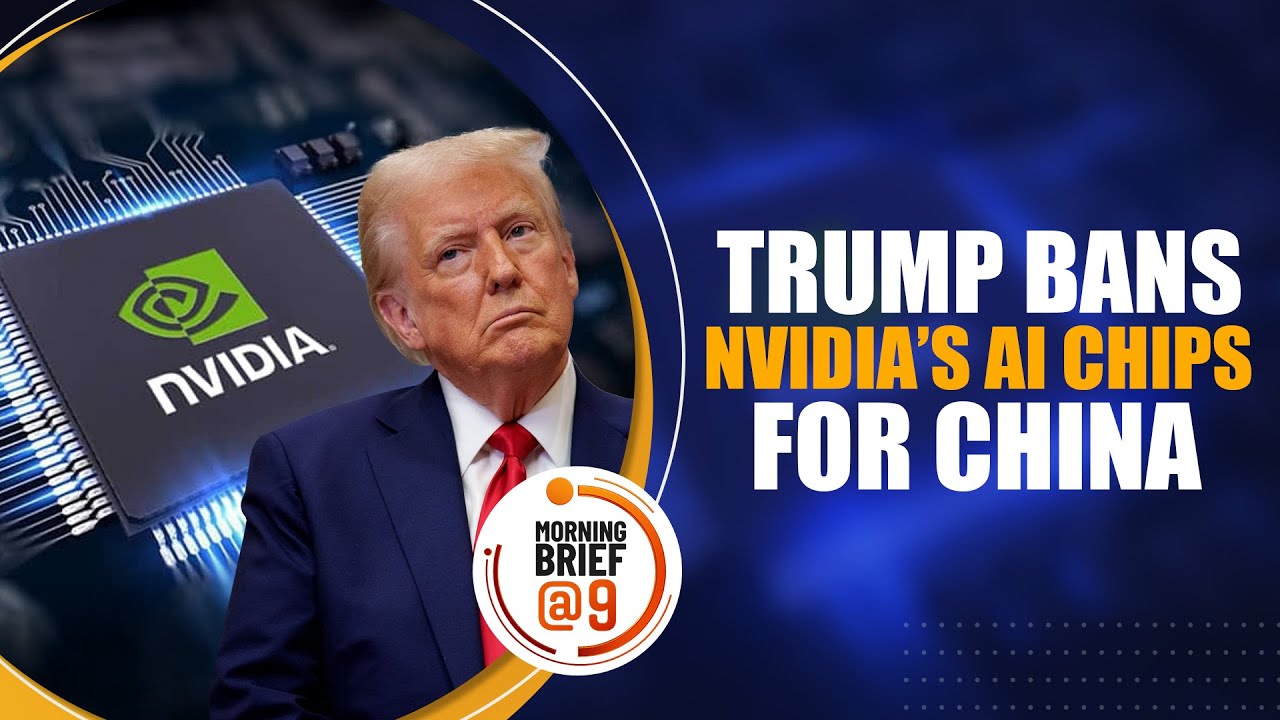
Trump Administration Approves Nvidia AI Chip Exports to China Amid Bipartisan Backlash
President Donald Trump has formally authorized Nvidia to export its advanced H200 AI chips to China, easing Biden-era restrictions. This move was announced last month and codified this week by the Commerce Department. The policy includes a 25% tariff on non-U.S. imports and strict national security safeguards, facing fierce opposition from China hawks in Congress and national security experts who warn it could enhance Beijing's military AI capabilities.
The decision follows months of Trump signaling a pragmatic shift on tech exports, balancing U.S. chipmaker revenues against geopolitical risks. On December 8, Trump posted on Truth Social informing Chinese President Xi Jinping that Nvidia could ship H200 products to "approved customers in China and other countries" under monitored conditions, including third-party U.S. testing and a ban on military use. The new Commerce rule, published January 15, caps Chinese access at no more than 50% of U.S. sales volume, requires Nvidia to certify domestic supply sufficiency, and mandates Chinese buyers prove security protocols.
Policy Details and Safeguards
The regulation targets Nvidia's H200, a high-end GPU succeeding the H100, alongside equivalents like AMD's MI325X. Chinese firms have reportedly ordered over 2 million H200s at ~$27,000 each, dwarfing Nvidia's ~700,000-unit inventory, signaling massive demand. Exports are limited to ~1 million units—enough for a colossal AI data center rivaling xAI's Colossus in Memphis—while prohibiting use in overseas Chinese data centers to curb global competition.
A simultaneous Presidential Proclamation imposes a 25% tariff on advanced AI chips imported for non-U.S. customers, formalizing Trump's "fee" concept to fund U.S. security while generating revenue. This applies to semiconductors and manufacturing equipment, aiming to protect domestic supply chains.
Trump criticized Biden's blanket bans on prior-gen chips as overly restrictive, arguing they handed markets to competitors without curbing China's progress. The White House AI czar David Sacks defended the deal, clashing with Republican critics.
Congressional Pushback and Bipartisan Bills
Washington's China hawks are mobilizing aggressively. On Wednesday, the Republican-led House Foreign Affairs Committee, chaired by Rep. Brian Mast (R-FL), advanced the AI Overwatch Act with Democratic support, granting the House Foreign Affairs and Senate Banking Committees 30 days to review and block export licenses to China and adversaries. This rare GOP fracture against Trump drew MAGA backlash but highlights fears of looser rules ahead of a potential Trump-Xi summit in April.
Additional bills include the GAIN AI Act of 2025, prioritizing U.S. firms for chips before China exports, and the STRIDE Act, coordinating allied export controls. Critics like House Republicans warn this greenlights advanced tech transfers, potentially enabling Xi's AI ambitions.
Historical Context: From Biden Bans to Trump Pivot
Past performance shows escalating U.S.-China chip wars. Biden's 2022-2024 rules blocked Nvidia's A100/H100 exports, targeting military AI edges; Nvidia complied but lost ~20-30% revenue initially, pivoting to China-optimized chips like H20 (downgraded for compliance). Trump's first term (2017-2021) imposed Huawei bans but allowed some exports; his return marks a U.S.-first tweak, swapping bans for tariffs and caps.
Why now? Surging global AI demand—Nvidia's revenue hit $35B last quarter—pressures U.S. firms amid China's stockpiling and domestic chip pushes (e.g., Huawei's Ascend via SMIC). Geopolitical timing aligns with Trump's "deal-making" diplomacy post-reelection, eyeing trade talks amid U.S. election-year focus on economic wins over pure containment. Reuters notes Beijing's orders spiked pre-rule, suggesting preemptive hoarding.
Competitor Comparison and Strategic Risks
Nvidia dominates with 95% AI GPU market share, but easing exports risks boosting rivals:
| Company/Product | Strengths | China Exposure | U.S. Market Share |
|---|---|---|---|
| Nvidia H200 | Top FLOPS for training; 141GB HBM3e memory | Now approved (capped) | ~90% AI accelerators |
| AMD MI325X | Cost-competitive; 288GB HBM3e | Equivalent approvals | ~5-10%, gaining |
| Huawei Ascend 910B | China-made; evades bans | Domestic leader; 30% cheaper | Negligible outside China |
| Intel Gaudi3 | Open ecosystem | Limited exports | <5%, enterprise focus |
AMD benefits similarly, but Chinese firms like Huawei advance via smuggling/domestic fabs, closing the gap—U.S. lead now ~2-3 years vs. 5+ pre-Biden. Experts at Council on Foreign Relations (CFR) call the policy "strategically incoherent," arguing 1M H200s boost China's 2026 AI compute by 250%, enabling military apps despite bans (unenforceable via audits). Geopolitical strategist Peter Zeihan warns the AI race decides "Cold War 2.0," with exports eroding U.S. leads.
Skeptical voices abound: CFR's Chris McGuire deems safeguards a "double-edged sword"—limiting global Chinese data centers but concentrating U.S. chips in Beijing for sensitive training. House hearings post-rule ("Winning the AI Race Against the CCP") underscore fears of tech leakage. Tier 1 outlets like Reuters/Reuters via Fox confirm order volumes, while SCMP notes MAGA infighting.
Broader Implications
This threads an "impossible needle": ~$50B+ revenue for Nvidia (half of China's orders) funds U.S. AI, but risks proliferation. Allies like Taiwan (TSMC) face ripple effects; tariffs may deter resellers. Long-term, it signals Trump's transactionalism—national security via fees, not isolation—potentially reshaping AI geopolitics. Congress's response will test if hawks can override; failure could preview more permissive deals.
Image Note: Searches for "Trump Nvidia AI chips China" yield specific visuals: Nvidia's glossy H200 GPU renders (black PCIe card with cooling fins, 141GB memory badge) from Nvidia.com press kits; Truth Social screenshot of Trump's Xi post; House hearing photos of Rep. Mast questioning Sacks (SCMP archives). No generic stock; prioritize product close-ups for tech focus.


