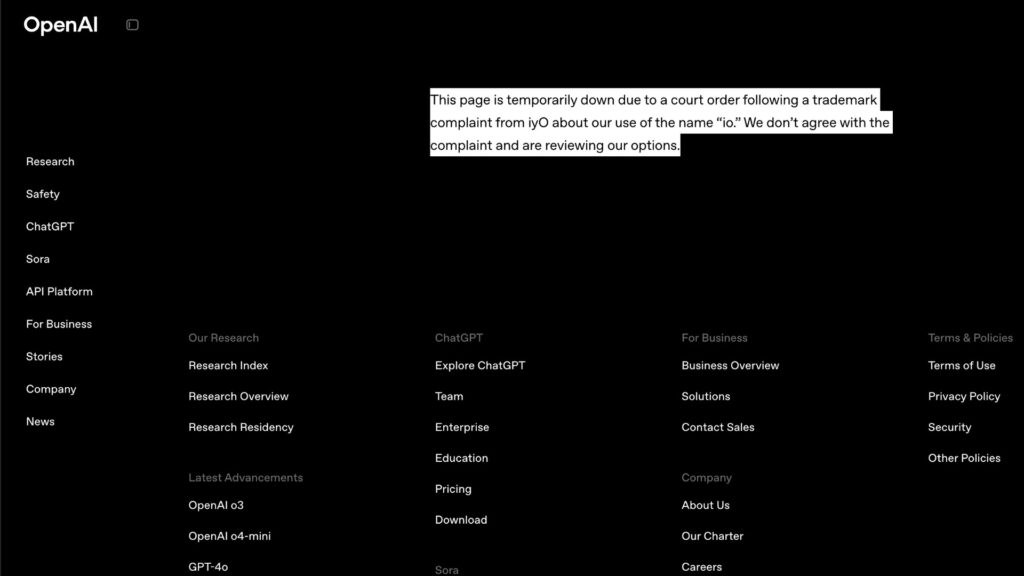
OpenAI Abandons 'io' Branding, Delays Hardware Launch to 2027
OpenAI has quietly dropped its 'io' branding for hardware products and postponed launch plans to 2027, marking a strategic retreat amid trademark disputes and competitive pressures in the AI hardware race.

The Branding Retreat: OpenAI's Hardware Strategy Shift
The race for AI hardware dominance just got messier. OpenAI has abandoned its 'io' branding for its planned hardware products and pushed the launch timeline to 2027, signaling a significant recalibration in the company's physical device ambitions. This move comes as the AI landscape intensifies, with competitors like Nvidia and other hardware makers accelerating their own initiatives.
The decision represents more than a simple rebranding exercise. It reflects mounting pressure from trademark challenges and the complex realities of bringing consumer hardware to market at scale. According to reports, OpenAI quietly pulled references to the 'io' branding amid legal complications, forcing the company to reconsider its go-to-market strategy.
What Triggered the Change?
Several factors appear to have converged on this decision:
- Trademark Complications: The 'io' domain and branding faced legal challenges that made continued use untenable
- Market Timing: A 2027 launch aligns with more mature AI infrastructure and consumer readiness
- Competitive Pressure: The AI hardware market is heating up with major players like Nvidia intensifying their focus, forcing OpenAI to recalibrate timelines
- Partnership Dynamics: OpenAI's relationship with hardware partners continues despite the branding shift
The Broader Context
This retreat underscores a critical tension in OpenAI's strategy. While the company has dominated large language models and AI software, the hardware space presents different challenges—manufacturing complexity, supply chain management, and consumer expectations around physical products.
The company's broader infrastructure strategy, including its Frontier Orchestration Layer, suggests OpenAI is shifting focus toward middleware and orchestration rather than consumer-facing devices. This pivot may indicate a more pragmatic approach to hardware—partnering with established manufacturers rather than building from scratch.
What's Next?
The 2027 timeline gives OpenAI breathing room to:
- Resolve trademark and legal issues
- Develop partnerships with established hardware manufacturers
- Refine product specifications based on evolving AI capabilities
- Assess market demand and competitive positioning
The delay also reflects broader industry trends. As AI agents reshape operational roles across sectors, the hardware that powers these systems becomes increasingly critical. OpenAI's postponement suggests the company is taking a longer view on when the market will be ready for its hardware vision.
The Competitive Landscape
OpenAI's retreat doesn't mean the company is abandoning hardware ambitions—it's recalibrating. The broader AI ecosystem continues to evolve, with multiple players pursuing different hardware strategies. By pushing to 2027, OpenAI avoids rushing to market with unproven products and instead positions itself to launch with mature technology and clearer market positioning.
The 'io' branding abandonment is ultimately a pragmatic decision. It removes legal obstacles, buys time for product development, and allows OpenAI to learn from competitors' hardware launches. Whether this delay strengthens or weakens OpenAI's hardware prospects will become clear as 2027 approaches.