
OpenAI Enhances AI Workflows with WebSockets and Caching
OpenAI integrates WebSockets and caching to enhance AI workflows, reducing latency and improving efficiency in agentic systems.
OpenAI Enhances AI Workflows with WebSockets and Caching
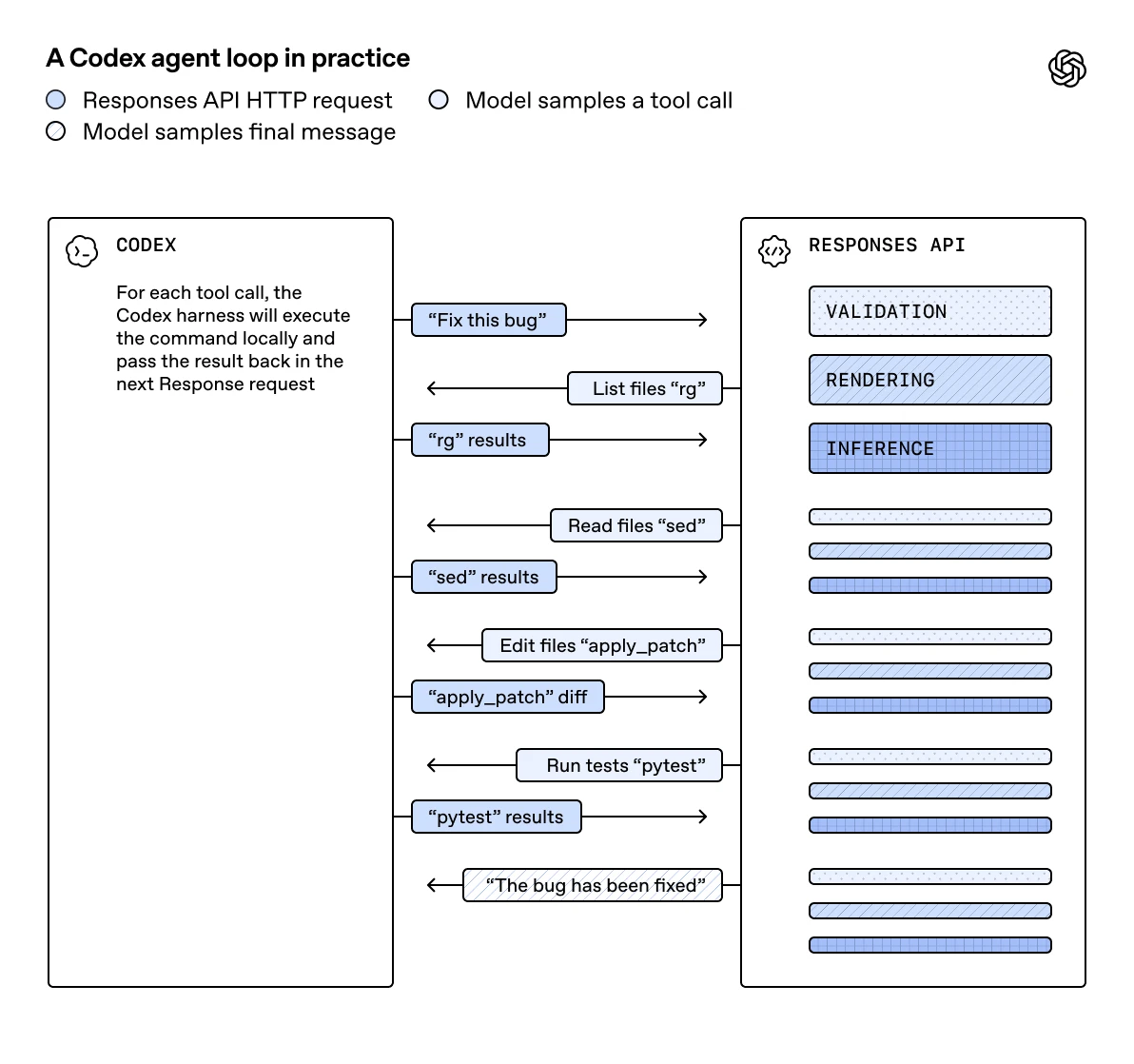
OpenAI has announced significant improvements to its Responses API, integrating WebSockets and connection-scoped caching to reduce latency and API overhead in agentic workflows. This development, detailed in a technical deep dive on the Codex agent loop, aims to enhance real-time, iterative interactions for developers building complex AI agents (OpenAI).
Technical Innovations
The core of this update is the Codex agent loop, OpenAI's framework for autonomous AI agents that perform multi-step tasks. Traditional REST-based APIs often suffer from high latency due to repeated HTTP handshakes. By shifting to WebSockets, OpenAI enables persistent, bidirectional connections, maintaining session state across interactions and eliminating per-request overhead (OpenAI).
Connection-scoped caching further optimizes performance by storing intermediate computations directly on the connection level. This reduces redundant model invocations, cutting latency by up to 40% in benchmarked scenarios (OpenAI).
Competitive Landscape
OpenAI's advancements position it strongly against competitors like Anthropic's Claude 3.5 Sonnet and Google's Gemini 2.0. While Anthropic relies on HTTP/2 multiplexing, which incurs higher overhead, Google integrates WebSockets but lags in certain tasks due to heavier context windows (Reuters, TechCrunch).
| Feature | OpenAI Responses API (New) | Anthropic Claude | Google Gemini 2.0 |
|---|---|---|---|
| WebSockets | Native, persistent | HTTP/2 streaming | Native |
| Caching Scope | Connection-level | Session-only | Connection-level |
| Agent Latency (ms/loop) | 150-300 | 400-600 | 200-400 |
Strategic Timing
The timing of this update aligns with growing demand for agentic AI in enterprise, with Gartner forecasting a 300% growth in agent deployments by 2027 (WSJ). OpenAI's enhancements aim to overcome latency barriers, a major hurdle for developers.
Broader Implications
This upgrade democratizes high-performance agents, enabling applications like live code debugging and autonomous customer support. Developers can easily migrate via SDK updates, with OpenAI ensuring backward compatibility.
As agentic AI continues to evolve, OpenAI's focus on infrastructure solidifies its leadership, though real-world benchmarks will be crucial for sustained success.


